
Master Form Stok Barang: Best Practices for Finance Professionals
Discover best practices for effective inventory management using form stok barang.

Introduction
In the complex realm of inventory management, the Form Stok Barang stands out as a crucial tool for finance professionals aiming for precision and efficiency. This instrument not only allows for meticulous tracking of stock levels but also significantly enhances financial reporting. By doing so, it ensures organizations maintain optimal cash flow and avoid costly discrepancies. Yet, a pressing question arises: how can finance teams effectively implement this system to revolutionize their inventory management practices and drive organizational success?
Understand the Importance of Form Stok Barang in Inventory Management
Unlocking Effective Stock Management with Form Stok Barang
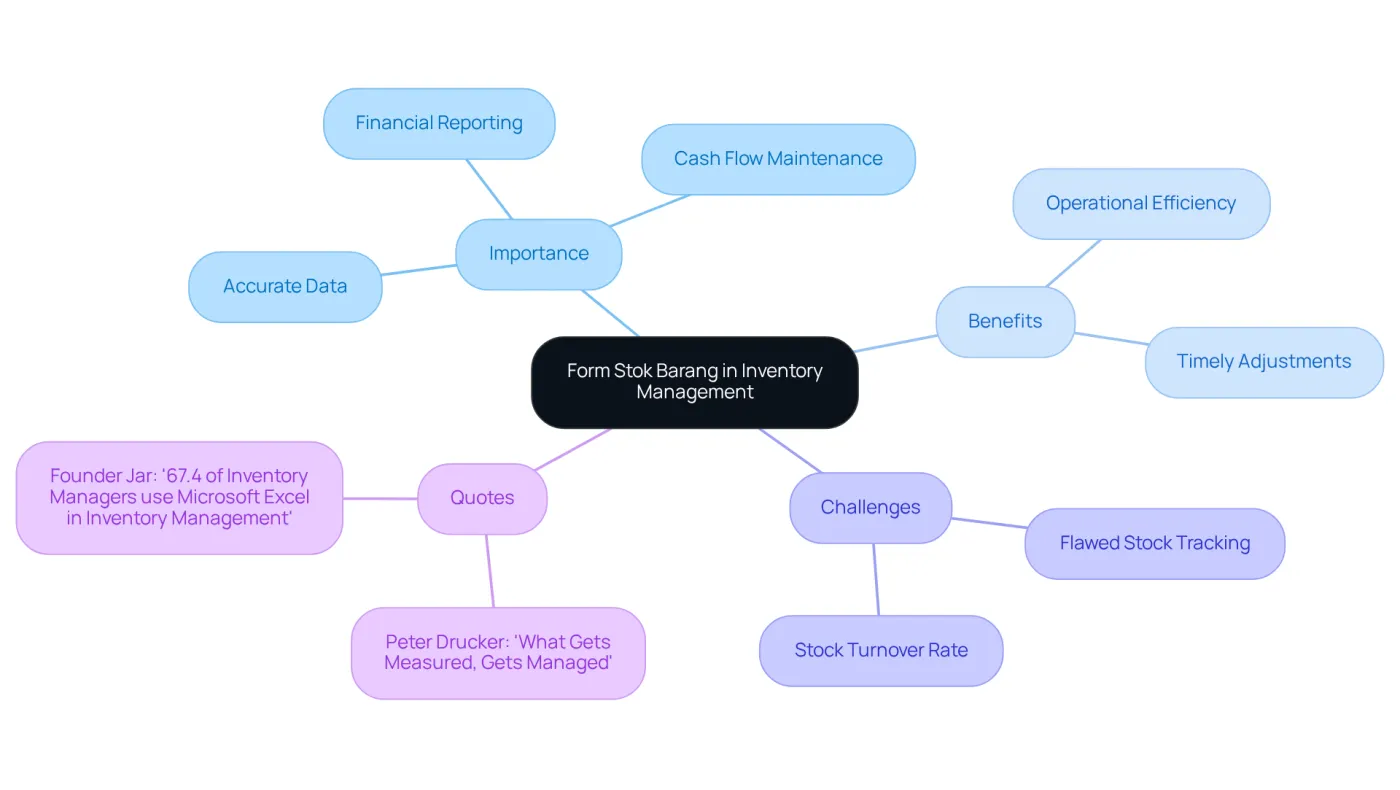
In the realm of stock management, Form Stok Barang stands out as an indispensable tool, particularly for finance experts who rely on accurate data for informed decision-making. This form stok barang enables businesses to meticulously track stock levels, monitor product movement, and ensure that financial records accurately reflect the true value of their goods.
Why is this crucial? Maintaining cash flow, optimizing stock levels, and preventing both overstocking and stockouts are vital for any organization. Moreover, precise stock records lead to enhanced financial reporting, which is essential for compliance and strategic planning.
Consider this: a finance team using form stok barang can swiftly identify discrepancies in stock levels. This capability allows for timely adjustments, ultimately improving operational efficiency. With a staggering 62% of organizations grappling with challenges stemming from flawed stock tracking, implementing such systems can significantly enhance financial decision-making and reporting accuracy.
As Peter Drucker famously stated, "What Gets Measured, Gets Managed." This underscores the importance of assessing stock for effective oversight. Furthermore, the financial sector's average stock turnover rate of 227.67 highlights the critical need for proficient resource management.
In conclusion, adopting form stok barang not only streamlines stock management but also empowers finance professionals to make data-driven decisions that foster organizational success.
Implement Form Stok Barang: Step-by-Step Guide
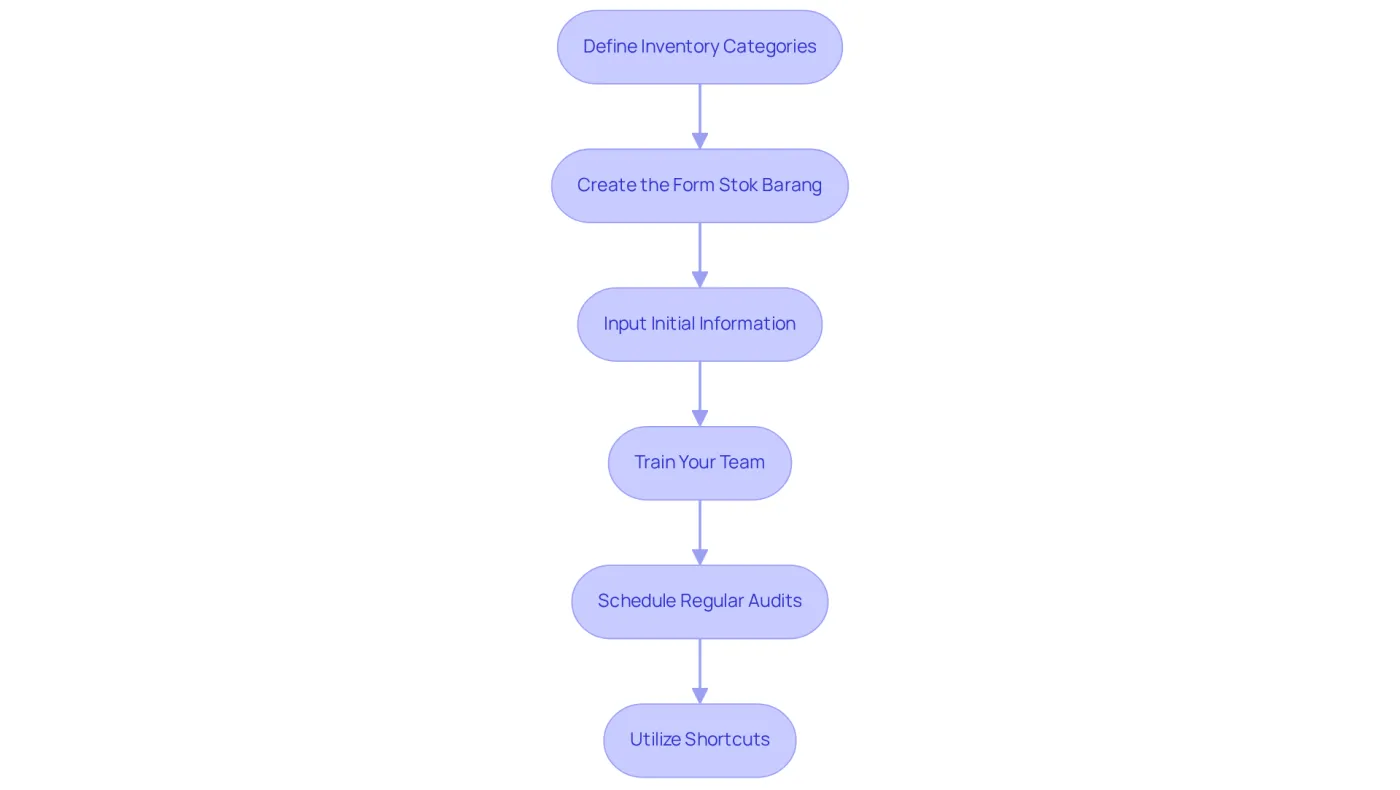
To implement Form Stok Barang effectively, follow these essential steps:
-
Define Inventory Categories: Start by categorizing your inventory items based on type, usage, or other relevant criteria. This organization enables efficient information management and retrieval.
-
Create the Form Stok Barang: Use Google Sheets to design your form. Essential fields should include item name, SKU, quantity, location, and supplier details to ensure comprehensive tracking.
-
Input Initial Information: Populate the form with existing inventory details, ensuring accuracy to establish a reliable baseline for future tracking. Precise initial information is crucial; companies that invested in machine learning for demand forecasting achieved 90% accuracy, compared to 60% with manual methods.
-
Train Your Team: Conduct training sessions for your team on effectively using the form. Emphasize the importance of precise information entry and regular updates. Organizations that focused on training experienced enhanced operational performance.
-
Schedule Regular Audits: Regular audits should be scheduled to compare physical stock with documented information in the form stok barang. This practice helps identify discrepancies and ensures precision, which is vital as 73% of businesses faced challenges with incorrect stock levels.
-
Utilize Shortcuts: Leverage ShortieCuts to enhance your experience in Google Sheets. By simply hitting "ALT" (or Option on Mac), you can access 233 Excel-style shortcuts that streamline data entry and navigation. This not only increases efficiency but also ensures that your data remains private and secure, as everything runs locally on your computer.
By adhering to these steps, finance experts can ensure their stock oversight processes are both efficient and effective, ultimately leading to enhanced productivity and reduced expenses.
Explore the Benefits of Integrating Form Stok Barang
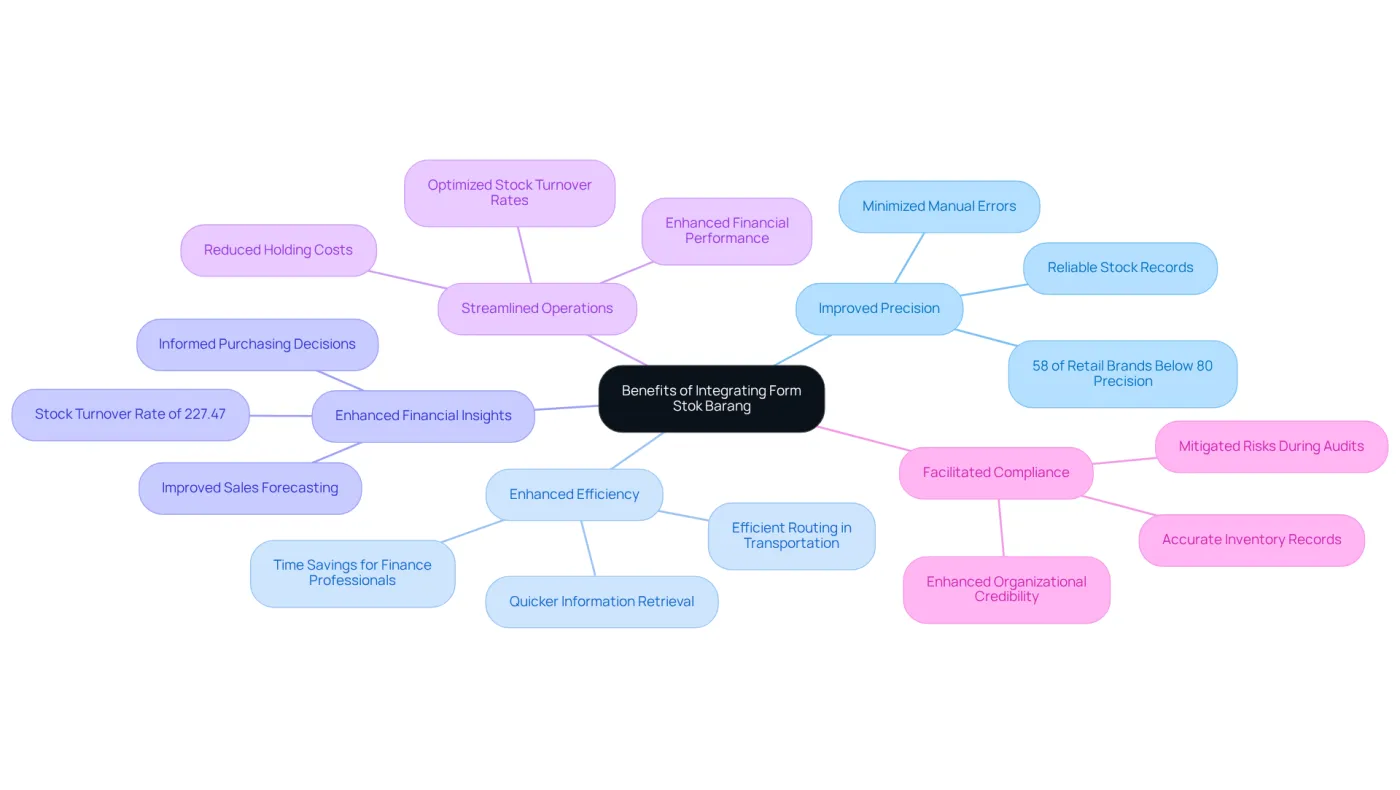
Integrating Form Stok Barang into your inventory management system offers substantial advantages:
-
Improved Precision: Standardizing information entry minimizes errors linked to manual tracking, resulting in more reliable stock records. This is crucial, as 58% of retail brands report stock precision below 80%, highlighting a pressing need for better information oversight. As Wilson Mizner wisely noted, 'If you count all your assets you always show a profit,' underscoring the importance of accurate stock control.
-
Enhanced Efficiency: The organized format allows for quicker retrieval and updates of information, saving valuable time for finance professionals who require immediate access to stock details. For example, efficient routing in transportation can further speed up operations by reducing distance and maximizing capacity utilization.
-
Enhanced Financial Insights: Accurate stock information bolsters financial reporting, empowering businesses to make informed decisions regarding purchasing, sales forecasting, and cash flow management. Companies with precise stock data can better align their supply levels with customer demand, ultimately improving turnover rates and profitability. Notably, the financial sector boasts an impressive stock turnover rate of 227.47, illustrating the benefits of effective management.
-
Streamlined Operations: A clear overview of stock levels enables businesses to optimize their stock turnover rates, which, according to industry benchmarks, can significantly influence profitability. This optimization not only reduces holding costs but also enhances overall financial performance.
-
Facilitated Compliance: Keeping accurate inventory records is vital for compliance with financial regulations, ensuring businesses can provide precise reports during audits. This adherence mitigates risks and enhances the organization's credibility.
In summary, the use of form stok barang not only enhances operational efficiency but also plays a crucial role in improving the financial health of the organization.
Overcome Challenges in Implementing Form Stok Barang
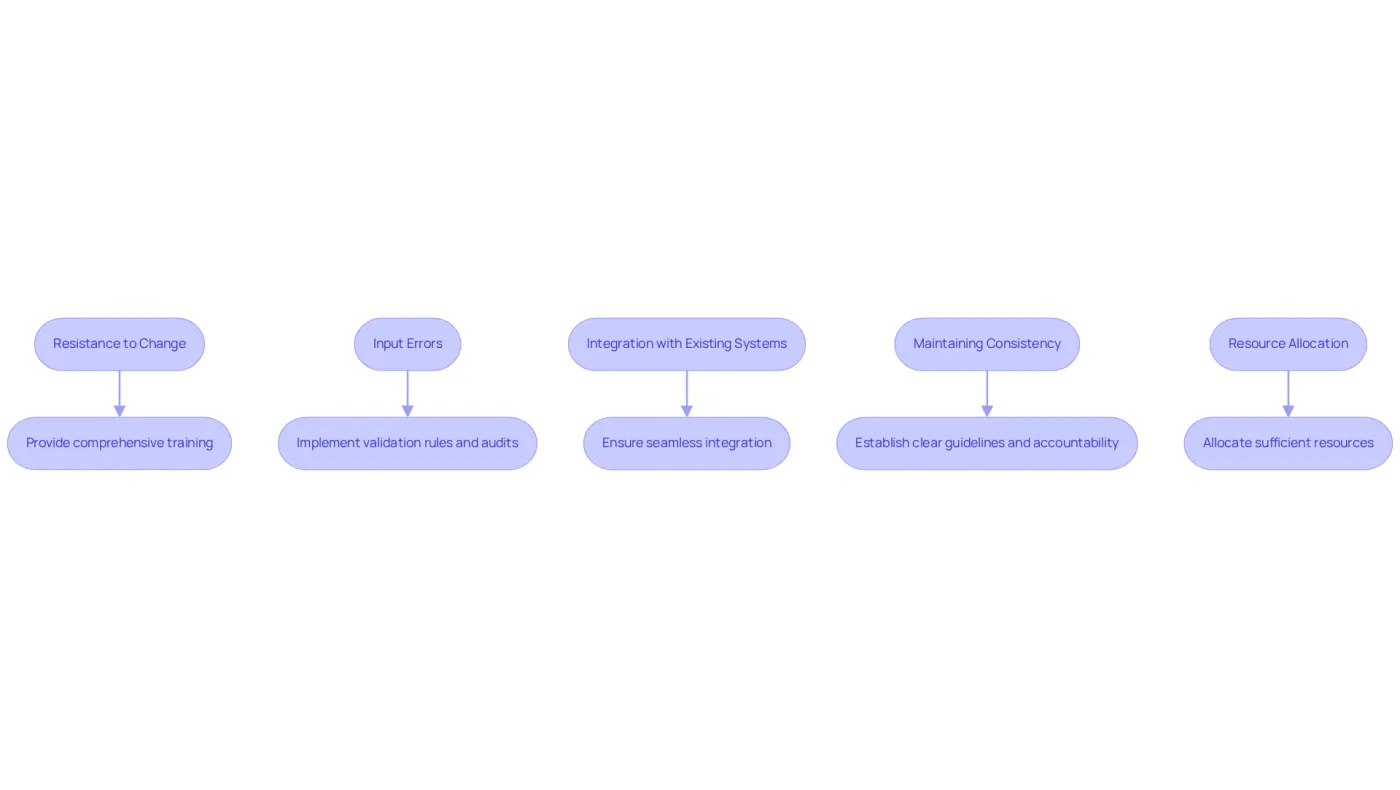
Implementing Form Stok Barang can present several challenges, but these can be effectively managed through strategic approaches:
-
Resistance to Change: Employees often hesitate to adopt new processes. In fact, studies indicate that 70% of change initiatives fail due to initial resistance. To overcome this, provide comprehensive training that highlights the benefits of the new system. This fosters a sense of ownership among team members, making them more likely to embrace the change.
-
Input Errors: Incorrect input can significantly weaken the effectiveness of the Stock Item Document. To minimize errors, implement validation rules in Google Sheets and encourage regular audits. Organizations that incorporate change oversight are more likely to achieve their goals, underscoring the importance of precision in information handling.
-
Integration with Existing Systems: Ensure that Stok Barang can seamlessly connect with other stock tracking tools or software. While this may require additional setup, it enhances overall efficiency and reduces the likelihood of data discrepancies.
-
Maintaining Consistency: Encourage team members to consistently use the form by establishing clear guidelines and accountability measures. Engaging employees in the decision-making process can significantly increase their commitment to following these guidelines.
-
Resource Allocation: Allocate sufficient resources for training and implementation to ensure a smooth transition. This includes dedicating time, personnel, and technology to support the new system. Organizations that prioritize employee support during transitions see a marked improvement in adoption rates.
By proactively addressing these challenges, finance professionals can successfully implement the form stok barang. This leads to improved inventory management and operational efficiency.
Conclusion
Implementing Form Stok Barang is crucial for finance professionals who seek to elevate their inventory management and ensure financial accuracy. This tool not only allows for meticulous tracking of stock levels but also empowers organizations to make informed decisions that directly enhance operational efficiency and financial health.
The article highlights essential practices for effectively utilizing Form Stok Barang. These include:
- Defining inventory categories
- Creating the form in Google Sheets
- Training staff
- Conducting regular audits
Each of these steps is vital in overcoming common challenges, such as resistance to change and input errors. By addressing these issues, organizations can achieve improved precision and compliance in inventory management. The integration of this system can significantly enhance financial insights, streamline operations, and ensure businesses are well-equipped to meet regulatory requirements.
In a landscape where accurate inventory management can determine a company's financial success, adopting Form Stok Barang is not just a recommendation; it is a necessity. By prioritizing effective stock tracking and management, finance professionals can steer their organizations toward greater profitability and operational success. Embracing these best practices will not only enhance inventory accuracy but also cultivate a culture of accountability and efficiency, ultimately paving the way for sustainable growth and a competitive edge.
Frequently Asked Questions
What is Form Stok Barang?
Form Stok Barang is a tool used in stock management to track stock levels, monitor product movement, and ensure that financial records accurately reflect the value of goods.
Why is Form Stok Barang important for businesses?
It is important because it helps maintain cash flow, optimize stock levels, and prevent overstocking and stockouts, which are vital for effective inventory management.
How does Form Stok Barang improve financial reporting?
By providing precise stock records, Form Stok Barang enhances financial reporting, which is essential for compliance and strategic planning.
What challenges do organizations face without effective stock tracking?
Organizations may struggle with discrepancies in stock levels, which can lead to operational inefficiencies and flawed financial decision-making.
What is the impact of flawed stock tracking on organizations?
A significant number of organizations, about 62%, face challenges due to flawed stock tracking, which can negatively affect financial decision-making and reporting accuracy.
How does Form Stok Barang assist finance teams?
It allows finance teams to swiftly identify discrepancies in stock levels, enabling timely adjustments that improve operational efficiency.
What does Peter Drucker's quote "What Gets Measured, Gets Managed" imply in the context of inventory management?
It implies that assessing and measuring stock is essential for effective oversight and management of resources.
What is the average stock turnover rate in the financial sector?
The average stock turnover rate in the financial sector is 227.67, highlighting the need for proficient resource management.
How does adopting Form Stok Barang benefit finance professionals?
It empowers finance professionals to make data-driven decisions that enhance organizational success and streamline stock management.