
Master Google Sheets Merge Cells Keyboard Shortcuts for Efficiency
Master the Google Sheets merge cells keyboard shortcut for efficient data management and organization.

Introduction
Mastering the art of merging cells in Google Sheets is essential for enhancing the clarity and organization of your data presentations. This powerful feature, often overlooked, allows you to combine multiple cells into one, resulting in visually appealing headers and neatly arranged information. However, the merging process can pose challenges, particularly the risk of losing valuable data if not executed properly.
So, how can you effectively harness the efficiency of keyboard shortcuts to merge cells while safeguarding your data integrity? By understanding the nuances of this feature, you can streamline your workflow and elevate your presentations to a professional standard. Embrace the power of merging cells and transform your data management today.
Understand Cell Merging in Google Sheets
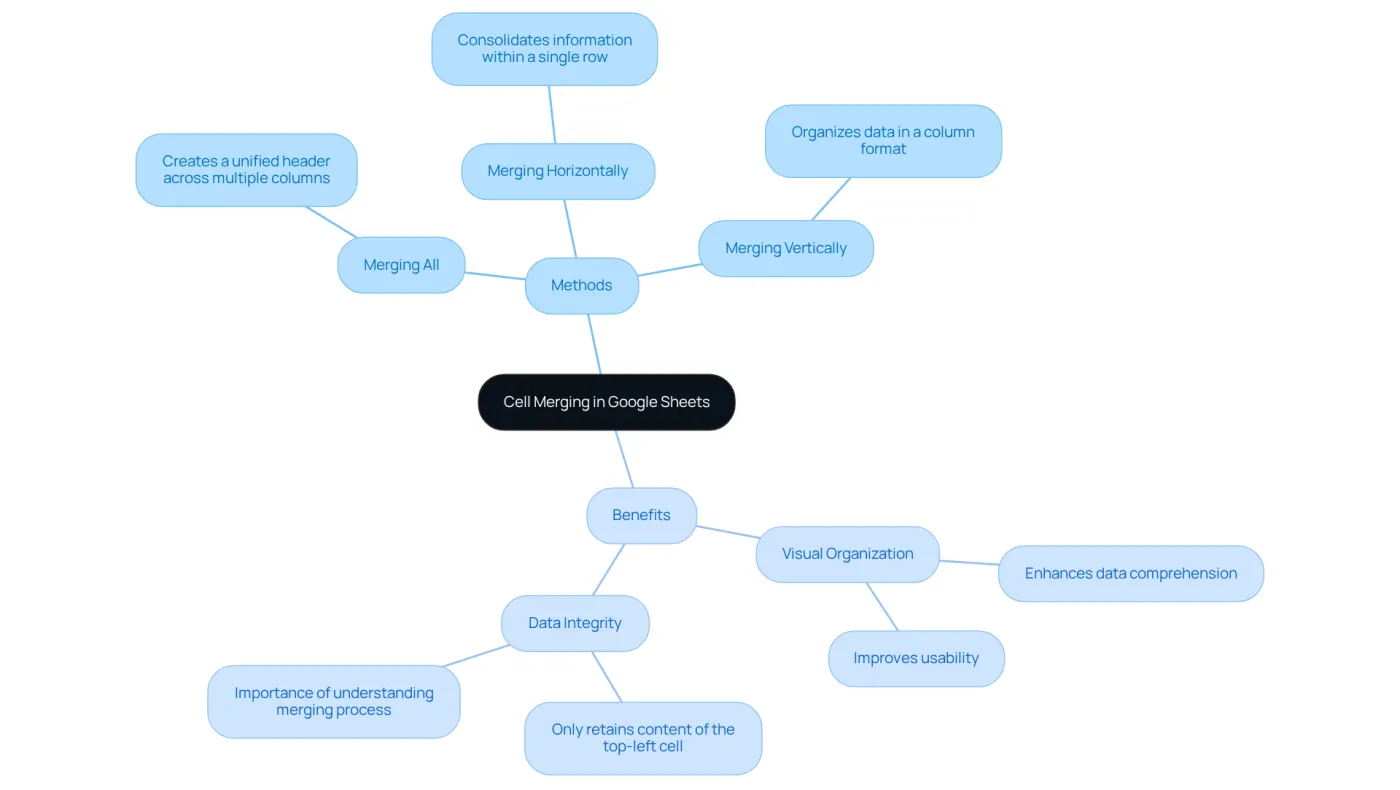
The google sheets merge cells keyboard shortcut enables users to unite two or more neighboring units into one, enhancing the visual arrangement of information. This technique is particularly beneficial for creating headers or organizing related data, as it helps present information more coherently. However, it’s essential to understand that when cells are merged, only the content of the top-left cell is retained, while the contents of the other cells are discarded. This underscores the importance of grasping the merging process to maintain data integrity and ensure your spreadsheet functions effectively.
The google sheets merge cells keyboard shortcut allows for three methods of combining cells:
- Merging all selected units
- Merging horizontally
- Merging vertically
Each method serves distinct purposes based on how your information is arranged. For instance, merging all selected cells is ideal for creating a unified header across multiple columns, while horizontal merging can be used to consolidate information within a single row. Vertical merging is advantageous for organizing data in a column format, facilitating clearer presentation and easier navigation.
The significance of visual organization in spreadsheets cannot be overstated; it profoundly affects data comprehension and usability. By effectively utilizing merged areas, individuals can craft a more organized and visually appealing spreadsheet, ultimately enhancing productivity and supporting better decision-making.
Implement Keyboard Shortcuts for Merging Cells
Are you tired of wasting time merging cells in Google Sheets? ShortieCuts offers a powerful solution that can streamline your workflow.
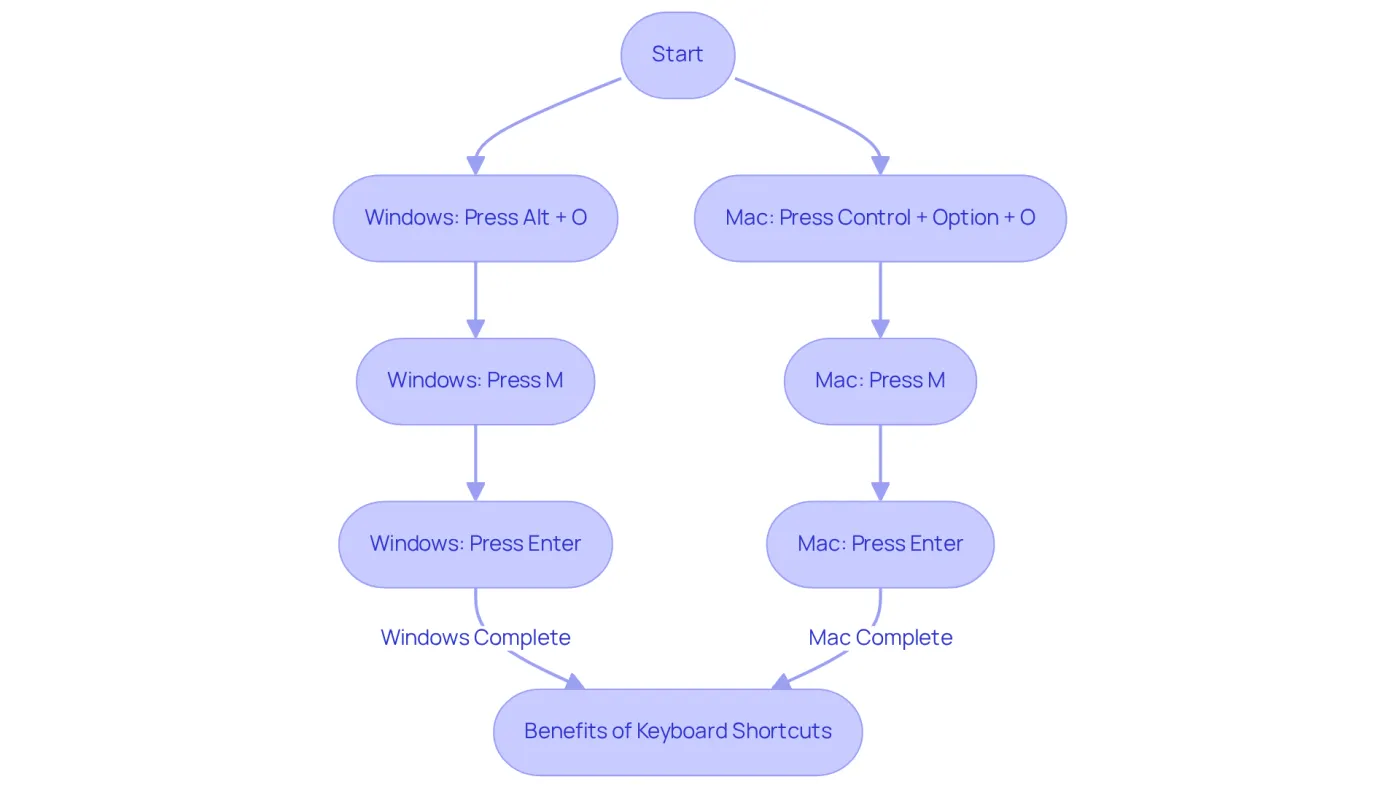
For Windows users, the Google Sheets merge cells keyboard shortcut involves simply pressing Alt + O, M, and then Enter. Mac users can achieve the same functionality with the Google Sheets merge cells keyboard shortcut, which involves using Control + Option + O, M, and Enter. When you press 'ALT' (or Option on Mac), key-tips appear in the corner of your screen, guiding you through the merging process. This means that by using the Google Sheets merge cells keyboard shortcut, you can merge cells without the hassle of navigating through menus, saving you both time and effort.
As Ben Collins, a freelance data analyst and Google Developer Expert, states, "Keyboard shortcuts reduce the need for repetitive mouse clicks and menu navigation." With ShortieCuts, you gain access to 233 Excel ALT shortcuts, allowing you to customize your shortcuts in Google Sheets to fit your unique workflow. Imagine designating a single keystroke to combine selected units - this can make your process even faster.
By incorporating these shortcuts into your daily tasks, you can significantly boost your efficiency and simplify your spreadsheet processes. Plus, you can rest assured that your information remains private and secure. Don't let tedious tasks slow you down; embrace the power of ShortieCuts and transform the way you work with spreadsheets.
Avoid Common Mistakes When Merging Cells
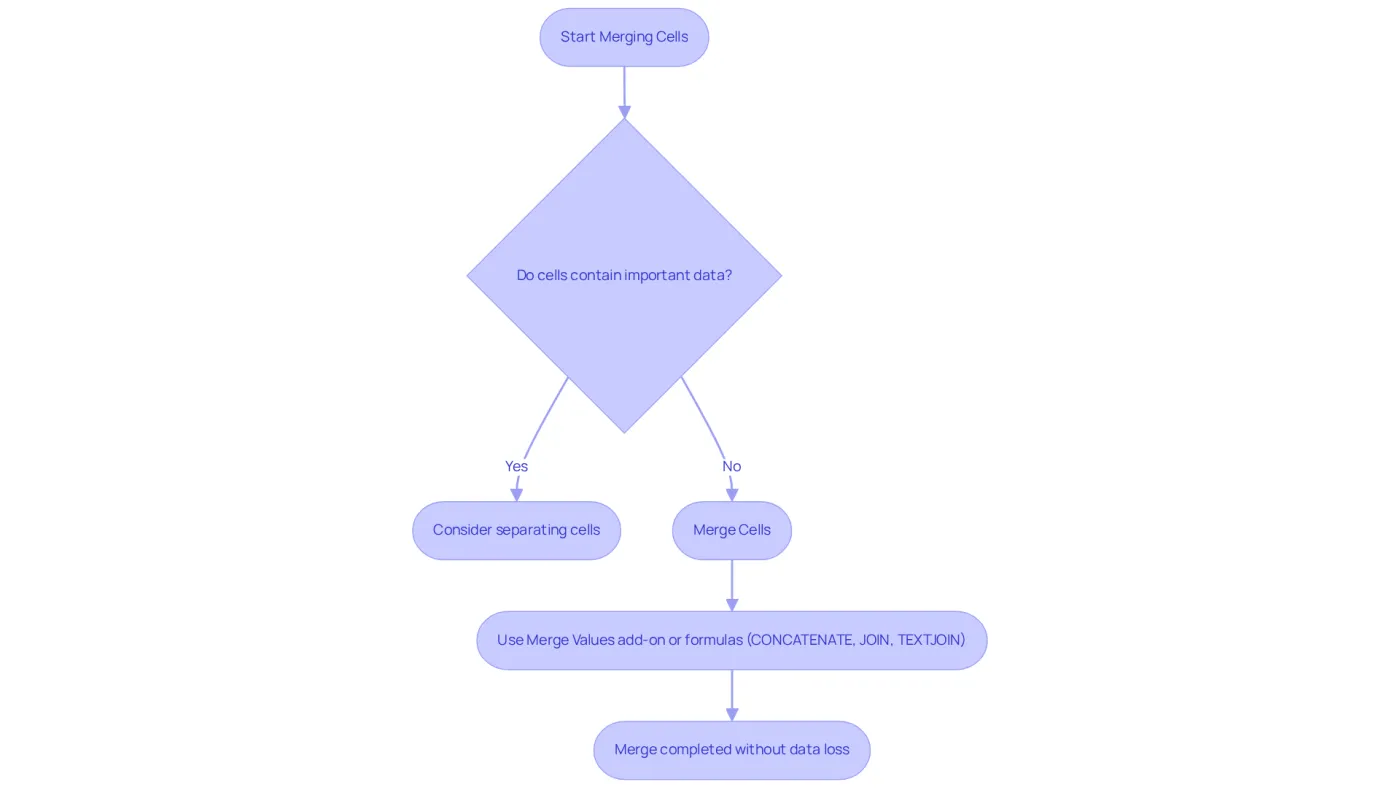
Combining units in Google Sheets can lead to significant information loss if not approached with caution. A common mistake is merging units that contain valuable data, as only the content of the upper-left cell is retained, resulting in the loss of all other information. For instance, if you merge a range of cells that includes names and addresses, only the name in the top-left cell will remain, while all other details are discarded. Additionally, merging items within a dataset can disrupt essential features like sorting and filtering, making data management cumbersome.
To mitigate these risks, it’s crucial to ensure that the cells you intend to combine do not contain important information or formulas. Before merging, consider separating cells if you need to perform operations that require access to individual cell values. Tools like the Merge Values add-on can be invaluable, offering flexible merging options without compromising data integrity. You can also utilize formulas such as:
CONCATENATEJOINTEXTJOIN
to combine data without losing any values. For quick merging in Google Sheets, the Google Sheets merge cells keyboard shortcut, which includes Alt (Windows, Chrome OS) / Ctrl + Option + Enter (Mac), can streamline the process. This method allows you to merge sections while preserving all relevant information, ensuring a more efficient workflow.
Maintain Data Integrity While Merging Cells
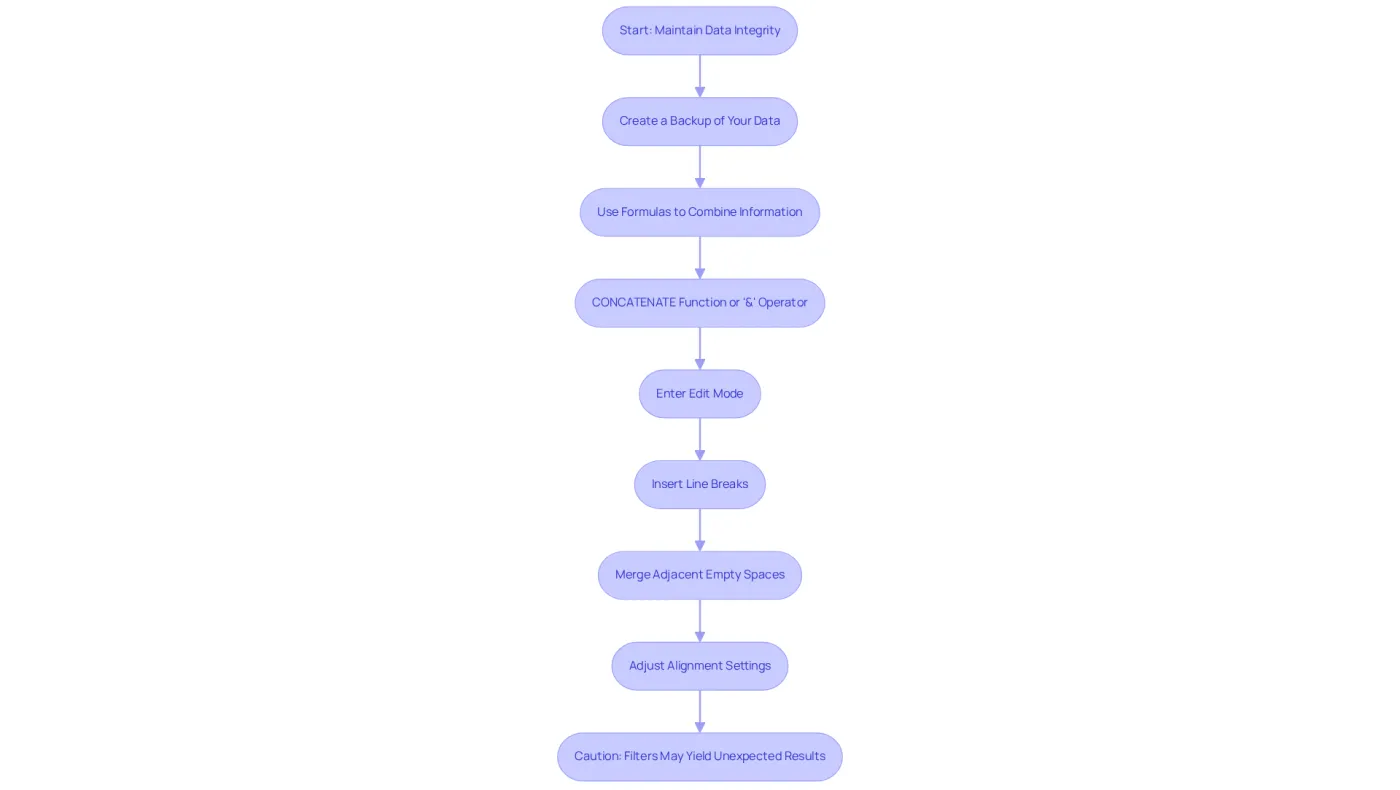
To maintain the integrity of your information while combining elements in Google Sheets, it is crucial to utilize the Google Sheets merge cells keyboard shortcut and follow established practices. Begin by creating a backup of your data, ensuring that recovery options are readily available if needed. Instead of merging individual units directly, consider using formulas to combine information from various sources. This approach helps preserve all details. For instance, the CONCATENATE function or the shorthand operator & can effectively merge text from adjacent units, resulting in a single display value without any loss of information. This technique is particularly beneficial for combining names or addresses, allowing for a clean presentation without sacrificing content.
When entering data into combined cells, double-click the target area or press F2 to enter edit mode. Type the first value, then use Ctrl + Enter (Windows) or Cmd + Option + Enter (Mac) to insert a line break before adding the second value. Additionally, ensure that adjacent empty spaces are merged to keep both values intact and legible, especially for headers or labels. Adjust alignment settings as needed to present the information neatly. Exercise caution when applying filters or sorting, as the Google Sheets merge cells keyboard shortcut can yield unexpected results. By adhering to these guidelines, you can ensure that your data remains intact and functional.
Conclusion
Mastering the keyboard shortcuts for merging cells in Google Sheets is not just about aesthetics; it’s a game-changer for productivity. By grasping the intricacies of cell merging, you can organize data effectively, create coherent headers, and streamline your workflow-all while ensuring that crucial information remains intact.
This article has underscored the significance of using keyboard shortcuts for merging cells, detailing methods for merging all selected cells, as well as horizontally or vertically. It’s vital to maintain data integrity by steering clear of common pitfalls, such as merging cells that contain valuable content. Consider utilizing alternative methods, like formulas, to preserve important information while achieving your desired layout.
Ultimately, adopting best practices for merging cells in Google Sheets is essential for anyone aiming to enhance their spreadsheet management. By embracing the efficiency of keyboard shortcuts and being mindful of data integrity, you can revolutionize your approach to data organization. This leads to clearer, more effective presentations. Implement these techniques to elevate your Google Sheets experience and foster better decision-making through organized data.
Frequently Asked Questions
What is cell merging in Google Sheets?
Cell merging in Google Sheets allows users to unite two or more neighboring cells into one, improving the visual arrangement of information.
Why is cell merging beneficial?
Cell merging is beneficial for creating headers and organizing related data, as it helps present information more coherently.
What happens to the contents of cells when they are merged?
When cells are merged, only the content of the top-left cell is retained, while the contents of the other cells are discarded.
What are the methods of merging cells in Google Sheets?
The methods of merging cells in Google Sheets include merging all selected cells, merging horizontally, and merging vertically.
When should I use each method of merging cells?
Merging all selected cells is ideal for creating a unified header across multiple columns, horizontal merging is used to consolidate information within a single row, and vertical merging helps organize data in a column format.
How does visual organization impact spreadsheets?
Effective visual organization in spreadsheets enhances data comprehension and usability, leading to better productivity and decision-making.