
Master the Auto Fit in Excel Shortcut for Efficient Spreadsheets
Master the auto fit in Excel shortcut for efficient and professional spreadsheet management.

Introduction
Excel's AutoFit feature revolutionizes the way we handle spreadsheets, turning the often tedious task of formatting into a seamless experience. By automatically adjusting the width of columns and the height of rows to fit cell contents perfectly, this tool not only enhances the visual appeal of your data but also significantly boosts efficiency. Yet, despite its advantages, many users face challenges - issues with merged cells or excessive spacing can obstruct optimal use.
So, how can you effectively navigate these pitfalls while maximizing the benefits of AutoFit? The answer lies in understanding its functionalities and applying best practices to ensure your spreadsheets look polished and professional.
Understand the AutoFit Feature in Excel
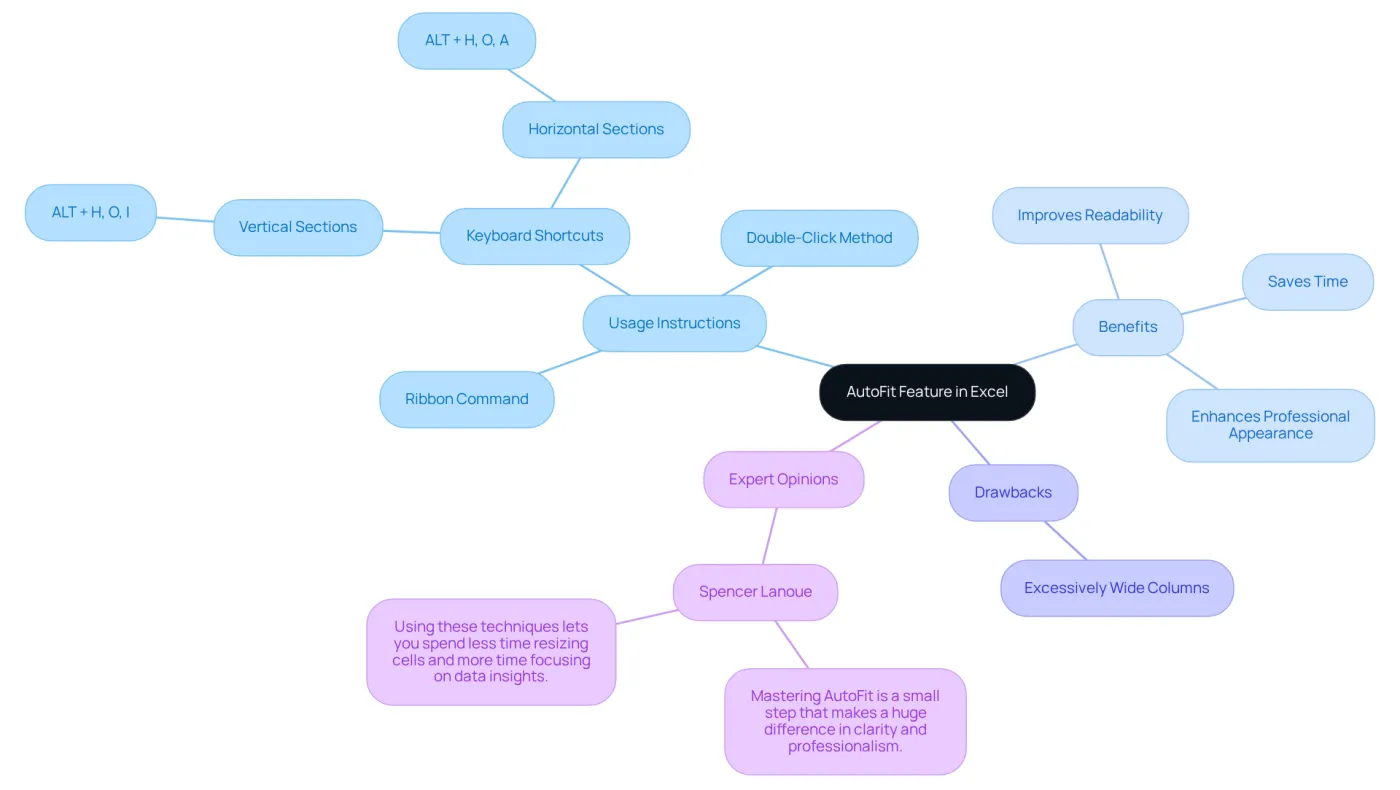
Excel's automatic adjustment feature is an essential tool that modifies the width of sections or the height of rows to fit the contents of the cells perfectly. This means that when a section contains varying lengths of text, the adjustment ensures all text is visible, eliminating truncation. Users can easily enable this feature by double-clicking the boundary line between header titles or by using the auto fit in excel shortcut with keyboard shortcuts:
- ALT + H, O, I for vertical sections
- ALT + H, O, A for horizontal sections
This functionality is crucial for maintaining a polished and professional appearance in spreadsheets. It removes the hassle of manual adjustments, ensuring that all data remains easily readable. While many users appreciate this feature, it’s important to be mindful of potential drawbacks, such as excessively wide columns from long entries, which can detract from the overall presentation.
Experts agree that mastering this feature can significantly enhance the clarity and professionalism of your work. Spencer Lanoue notes, "Mastering the feature is a small step that makes a significant impact on the clarity and professionalism of your Excel work." In fields like financial modeling, where accurate data presentation is vital, the automatic adjustment feature guarantees that all entries are visible, boosting the overall readability of reports. Real-world applications show that users who leverage this feature can concentrate more on data analysis rather than formatting, ultimately leading to more insightful decision-making.
Implement the AutoFit Shortcut for Quick Adjustments
Are you struggling with the tedious task of adjusting widths and heights in your spreadsheets when you could use the auto fit in excel shortcut? You’re not alone. Many finance professionals face this challenge, especially when dealing with large datasets. Fortunately, there's a solution: the ShortieCuts extension for Google Sheets.
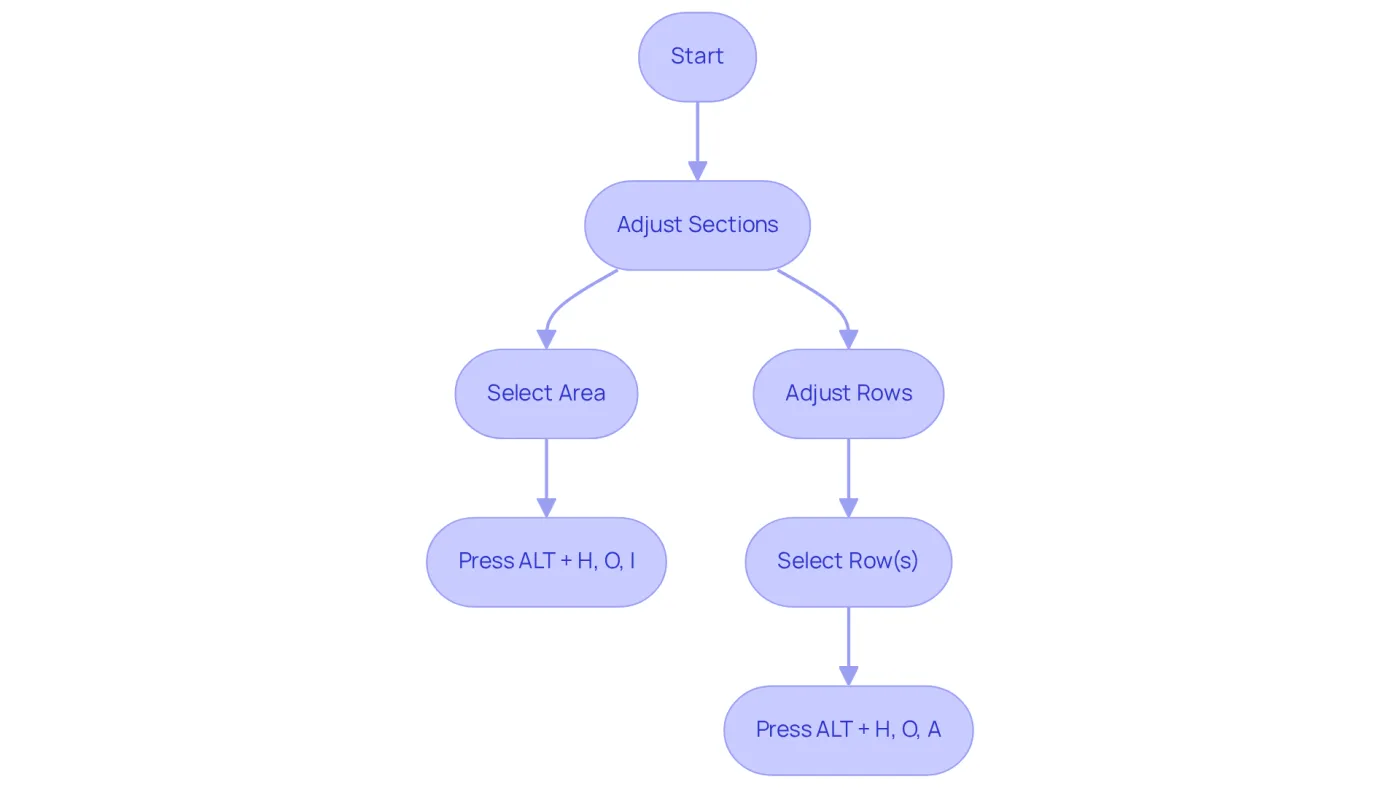
With ShortieCuts, efficiency is just a keystroke away. Simply hit "ALT" (or Option on Mac) to reveal helpful key-tips in the corner of your screen. For sections, select the desired area and press ALT + H, O, I. For rows, choose the row(s) and press ALT + H, O, A. This method is particularly beneficial when managing extensive data, allowing for quick adjustments without the hassle of mouse navigation.
Imagine being able to format your entire spreadsheet in seconds! Users can select multiple sections or rows simultaneously, ensuring a neat and organized layout across the board. Many finance professionals report that these shortcuts not only save time but also enhance data clarity and organization, making analysis and sharing a breeze. In fact, research indicates that the average number of adjustments made with the auto fit in excel shortcut in large datasets can exceed 50, underscoring its significance in maintaining clarity and order in complex spreadsheets.
As John Michaloudis, Founder & Chief Inspirational Officer, aptly puts it, 'The auto fit in excel shortcut makes adjusting the column width a breeze once you get the hang of it.' However, be cautious of common pitfalls, such as issues arising from merged areas or hidden characters, which can hinder the effectiveness of automatic adjustments. To avoid these complications, ensure that sections are unmerged and check for any concealed characters that might affect the adjustment process.
Ready to streamline your spreadsheet management? Embrace the power of ShortieCuts and transform the way you work with data.
Avoid Common Pitfalls When Using AutoFit
Navigating the Challenges of Excel's Automatic Resizing Function
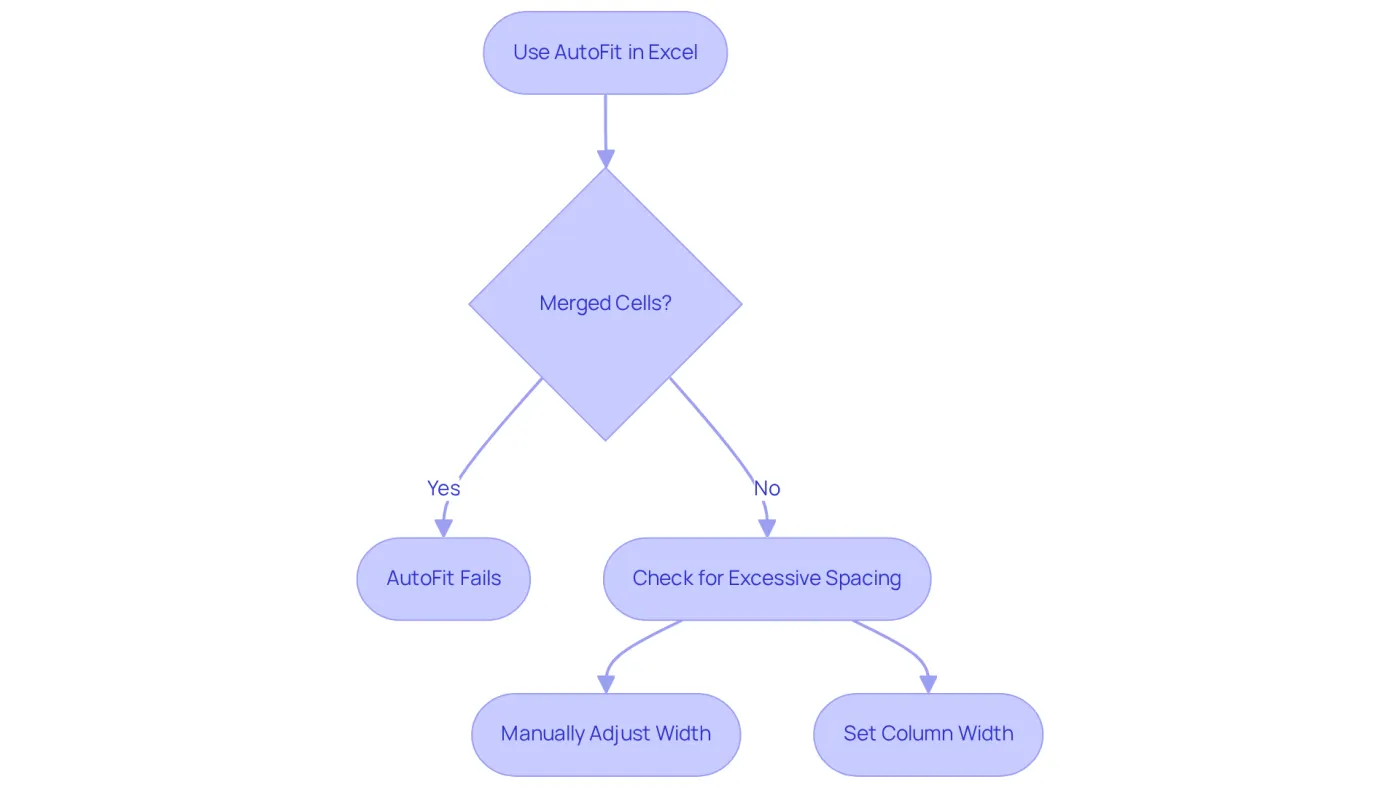
The automatic resizing function in Excel is undoubtedly a valuable feature, yet it presents significant challenges that users must navigate. One notable restriction is its incompatibility with merged sections; the automatic sizing feature fails to adjust the dimensions of rows or columns that include combined cells. As Excel instructor Julius Getz Mørk points out, "This feature doesn't operate on combined sections," highlighting a common frustration among users.
To effectively utilize the feature of auto fit in Excel shortcut, it is essential to unmerge any cells beforehand. However, users often encounter situations where automatic adjustment results in excessive spacing, particularly when content varies greatly in length. This can lead to inefficient space usage and a cluttered appearance in spreadsheets.
Statistics reveal that approximately 30% of Excel practitioners frequently employ merged cells, exacerbating these issues, especially in finance-related tasks where clarity and organization are crucial.
To address these challenges, consider:
- Manually adjusting the column width after using the auto fit in Excel shortcut
- Opting for the 'Set Column Width' option for greater precision
By understanding these common pitfalls, users can maintain cleaner, more efficient spreadsheets.
Combine AutoFit with Other Excel Tools for Maximum Efficiency
Maximize Your Spreadsheet Efficiency
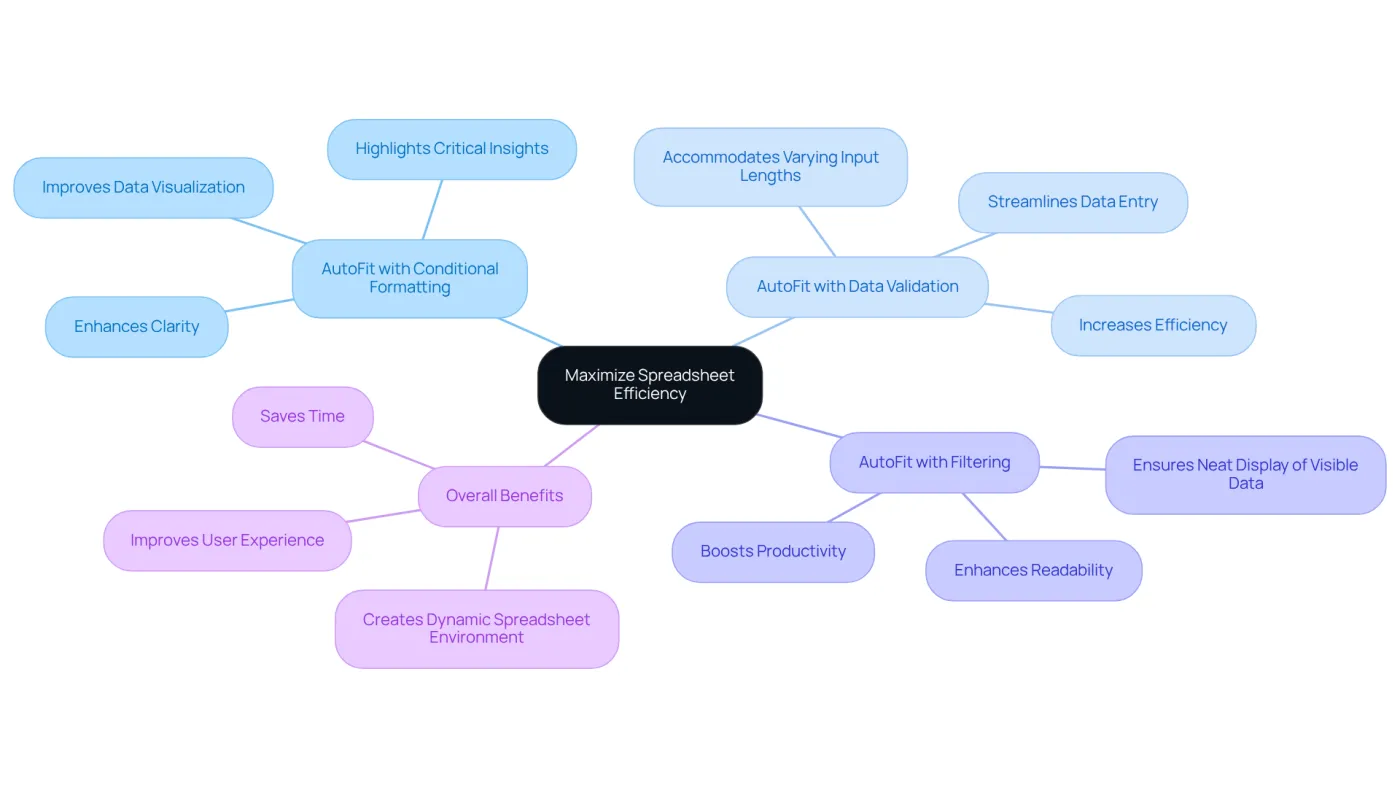
Are you struggling with inefficient spreadsheets? Merging the auto fit in excel shortcut with other Excel tools can be your solution. By utilizing automatic sizing alongside conditional formatting, you can highlight important data while ensuring that all information remains visible. This combination not only enhances clarity but also draws attention to critical insights.
Moreover, integrating automatic resizing with data validation streamlines data entry processes. Users can quickly adjust column widths to accommodate varying input lengths, making data management more efficient. Imagine the time saved when using the auto fit in excel shortcut, as your spreadsheets adapt seamlessly to the data you input!
Another powerful combination is using the auto fit in excel shortcut together with filtering options. After applying filters, utilizing the auto fit in excel shortcut ensures that all visible data is neatly displayed, enhancing readability and usability. This approach not only improves the appearance of your spreadsheets but also boosts productivity by making information easier to access.
By integrating these tools, you create a dynamic and user-friendly spreadsheet environment. Don’t let inefficient spreadsheets hold you back - implement these strategies today and experience the difference!
Conclusion
Mastering the AutoFit feature in Excel is a game-changer for anyone aiming to enhance the efficiency and clarity of their spreadsheets. This automatic adjustment tool ensures that all cell contents are visible and contributes to a professional appearance. By focusing on data analysis rather than tedious formatting, users can significantly improve their workflow.
Utilizing keyboard shortcuts like ALT + H, O, I for vertical adjustments and ALT + H, O, A for horizontal ones streamlines the process. The article explores various aspects of the AutoFit feature, including its benefits, potential pitfalls, and ways to combine it with other Excel tools for maximum efficiency. Key insights emphasize the importance of avoiding common mistakes, such as using merged cells that can hinder AutoFit's effectiveness. Moreover, integrating AutoFit with features like conditional formatting and filtering enhances the readability and usability of spreadsheets.
Ultimately, embracing the AutoFit shortcut is not merely about saving time; it’s about creating a more organized and accessible data environment. Leveraging this powerful tool transforms spreadsheet management, leading to more insightful decision-making and improved productivity. Adopting these strategies today paves the way for a more efficient and effective use of Excel, ensuring that data presentation is as clear and impactful as possible.
Frequently Asked Questions
What is the AutoFit feature in Excel?
The AutoFit feature in Excel automatically adjusts the width of columns or the height of rows to fit the contents of the cells, ensuring all text is visible and eliminating truncation.
How can users enable the AutoFit feature?
Users can enable the AutoFit feature by double-clicking the boundary line between header titles or by using keyboard shortcuts: ALT + H, O, I for vertical sections and ALT + H, O, A for horizontal sections.
Why is the AutoFit feature important for spreadsheets?
The AutoFit feature is important because it maintains a polished and professional appearance in spreadsheets, removes the hassle of manual adjustments, and ensures all data remains easily readable.
Are there any drawbacks to using the AutoFit feature?
Yes, potential drawbacks include excessively wide columns resulting from long entries, which can detract from the overall presentation of the spreadsheet.
How does mastering the AutoFit feature impact Excel work?
Mastering the AutoFit feature enhances the clarity and professionalism of Excel work, allowing users to focus more on data analysis rather than formatting.
In what scenarios is the AutoFit feature particularly useful?
The AutoFit feature is particularly useful in fields like financial modeling, where accurate data presentation is vital, as it guarantees that all entries are visible and boosts the overall readability of reports.