
Master the Ctrl+Shift+L in Excel: Restore and Troubleshoot Steps
Master the 'ctrlshiftl in excel' shortcut for efficient data filtering and troubleshooting in Excel.

Introduction
Mastering keyboard shortcuts is crucial for boosting productivity, particularly in the fast-paced realm of data analysis. One shortcut that stands out is Ctrl+Shift+L, which simplifies the filtering process in Excel, making data management not just efficient but also intuitive. But what happens when this essential shortcut fails to work?
Understanding how to troubleshoot and restore the Ctrl+Shift+L functionality is vital. It empowers users to optimize their workflow and raises important questions about the underlying settings and potential conflicts that can disrupt such essential commands. By addressing these issues, you can ensure that your data analysis remains seamless and effective.
Understand the 'Ctrl+Shift+L' Shortcut in Excel
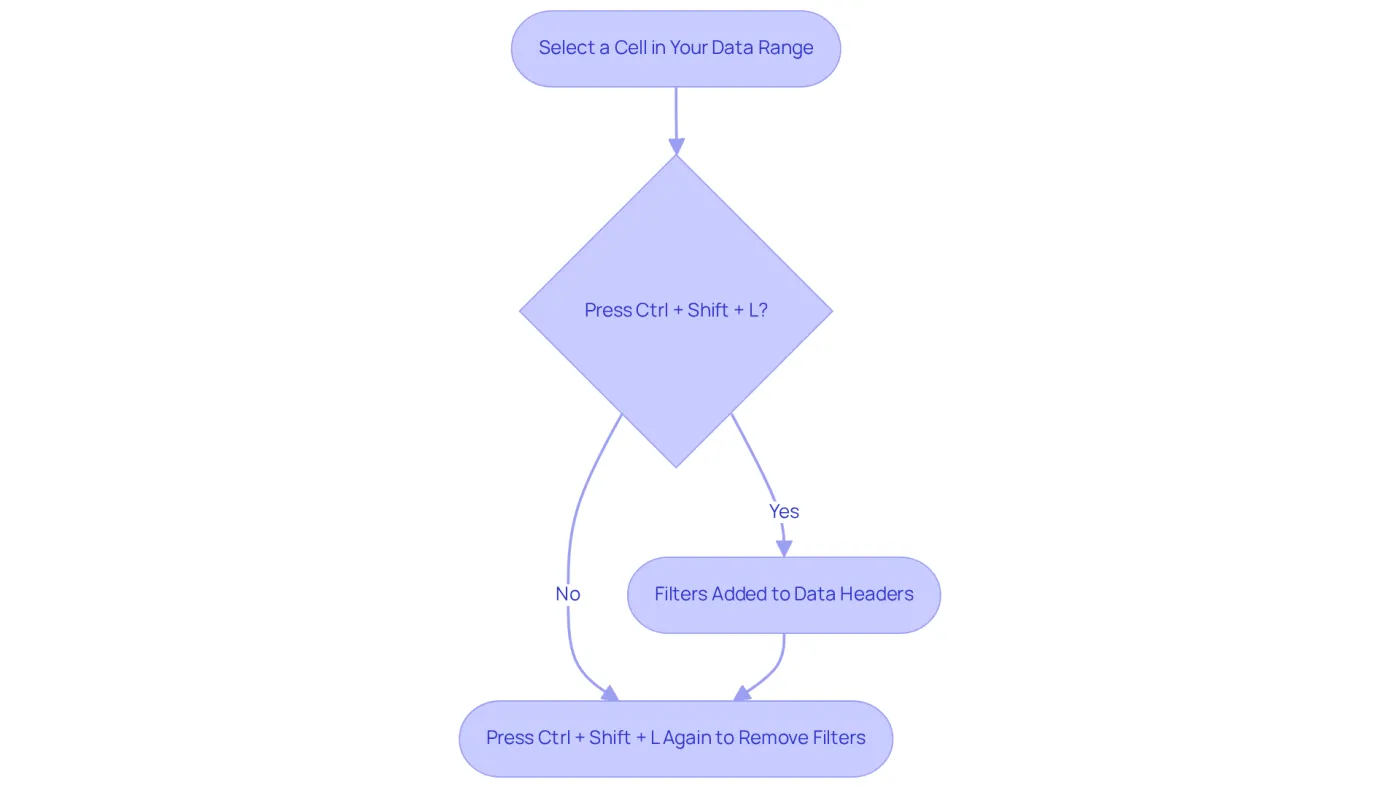
The 'ctrlshiftl in excel' command is an essential tool for analysts and finance professionals. This command allows for the swift toggling of filters on selected ranges, streamlining the data management process. When activated, it adds filter drop-downs to your data headers, making sorting and filtering not just efficient but also intuitive.
Imagine handling extensive datasets with ease - this feature simplifies manipulation and significantly boosts productivity. Productivity experts assert that mastering shortcuts like 'ctrlshiftl in excel' can drastically reduce the time spent on repetitive tasks, enabling professionals to focus on what truly matters: analysis and decision-making.
To utilize the powerful shortcut known as ctrlshiftl in excel, simply select any cell within your range and press 'Ctrl', 'Shift', and 'L' simultaneously. Pressing the same combination again will remove the filters, allowing for quick adjustments to your view.
Moreover, the broader context of spreadsheet commands underscores their critical role in data analysis. These commands can save hours across various repetitive tasks, making them indispensable for experts in the field. Embrace this command and transform your workflow today.
Check Excel Settings and Preferences
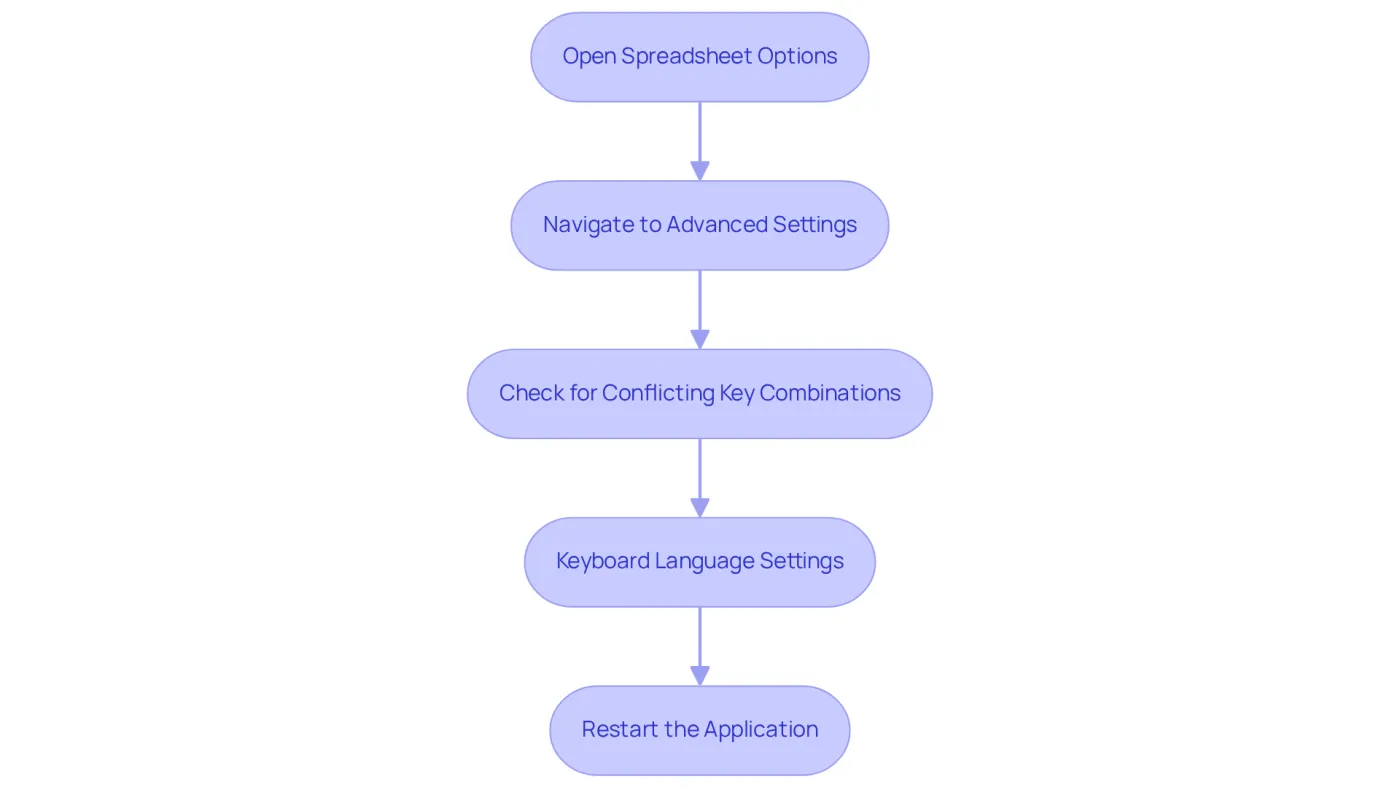
To ensure the [ctrlshiftl in excel](https://shortiecuts.com/setup) shortcut functions correctly, it’s essential to check your spreadsheet settings. Here’s how to do it:
- Open Spreadsheet Options: Click on 'File' in the top left corner, then select 'Options'. This is your gateway to customizing your Excel experience.
- Navigate to Advanced Settings: In the Excel Options window, click on 'Advanced'. This section holds the key to many functionalities.
- Check for Conflicting Key Combinations: Scroll down to the 'Lotus Compatibility' section and ensure that no conflicting key combinations are enabled. Remember, installed add-ons can disrupt default key combinations, so keep an eye on those as well.
- Keyboard Language Settings: Ensure that your keyboard language settings match your physical keyboard layout. Mismatched settings can lead to unexpected behavior in features, which can be frustrating.
- Restart the Application: After making any changes, restart the application to apply the new settings. This step is crucial for ensuring that your adjustments take effect.
By following these steps, you can enhance your productivity and ensure that your shortcuts, including ctrlshiftl in excel, work seamlessly.
Restore the 'Ctrl+Shift+L' Shortcut
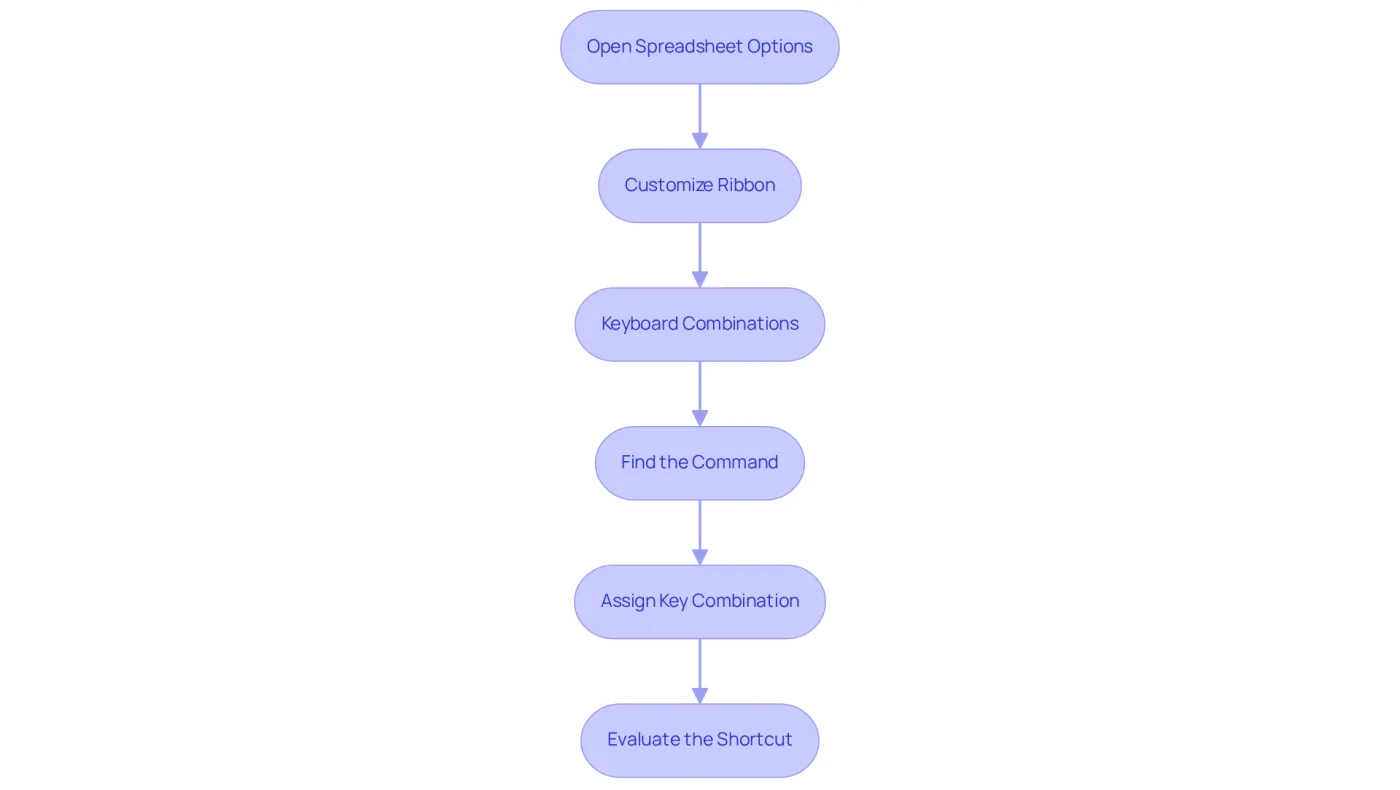
If the 'ctrlshiftl in excel' shortcut isn't functioning, it's essential to restore it. Here’s how you can do that effectively:
- Open Spreadsheet Options: Begin by clicking on 'File', then select 'Options'.
- Customize Ribbon: In the Excel Options window, navigate to 'Customize Ribbon'.
- Keyboard Combinations: At the bottom of the window, click on 'Customize...' next to 'Keyboard combinations'.
- Find the Command: In the 'Categories' list, choose 'All Commands'. In the 'Commands' list, locate 'AutoFilter'.
- Assign Key Combination: Click on 'AutoFilter', then in the 'Press new key combination' box, press 'Control+Shift+L'. Click 'Assign' and then 'Close'.
- Evaluate the shortcut by returning to your worksheet and testing the 'ctrlshiftl in excel' key combination by selecting a data range and pressing it to verify if it activates the filter.
Restoring this shortcut not only enhances your efficiency but also streamlines your workflow, allowing you to manage data effortlessly.
Troubleshoot Common Issues with the Shortcut
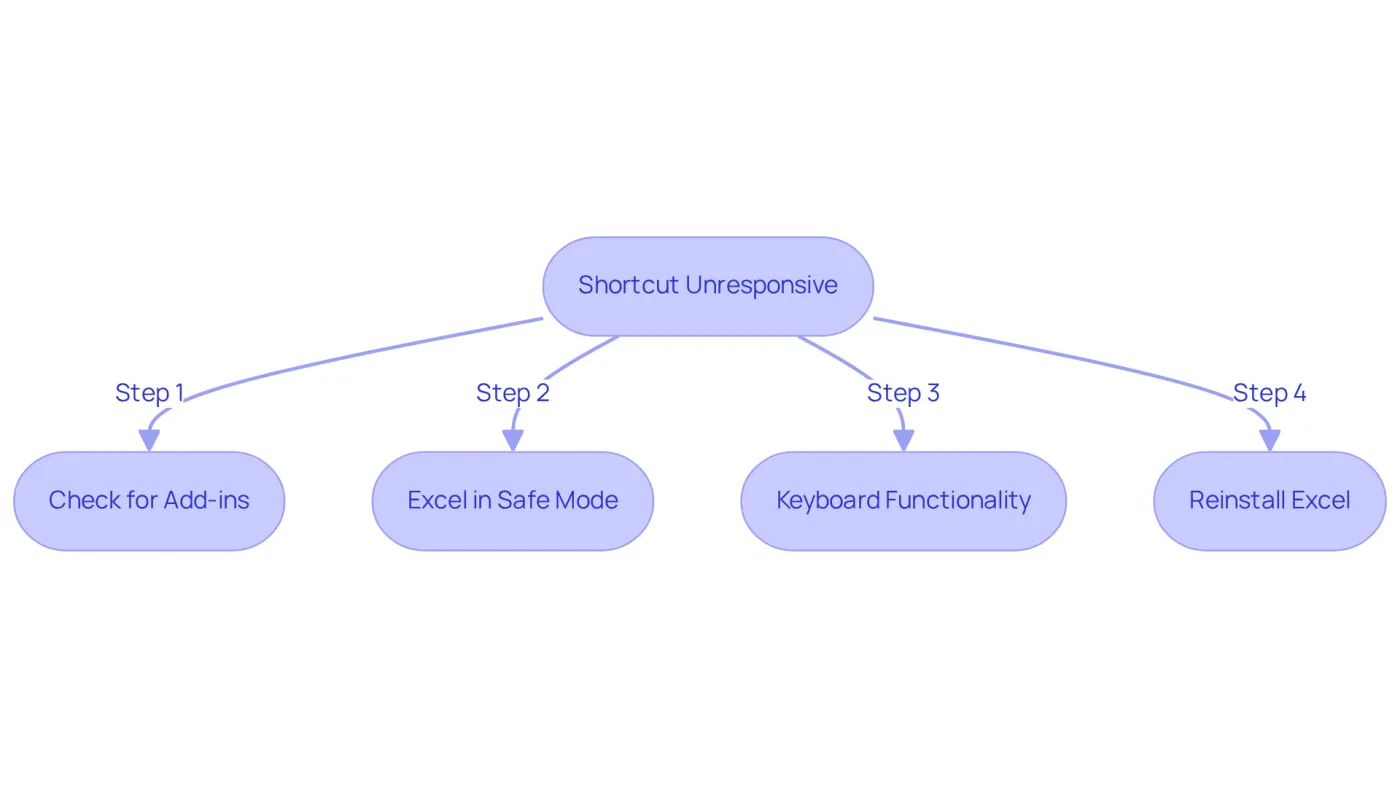
If the 'Ctrl+Shift+L' shortcut remains unresponsive after attempting initial fixes, it's crucial to explore effective troubleshooting strategies:
-
Check for Add-ins: Many users have found that Excel add-ins can disrupt default key combinations. In fact, 50% of US respondents struggle to interpret spreadsheet data, often due to issues with quick methods. Temporarily disabling any active add-ins may restore functionality to the link, which can be done using
ctrlshiftlin Excel. As one tech support expert noted, 'Some add-ins for spreadsheets can supersede standard key combinations likectrlshiftlin Excel.' -
Excel in Safe Mode: Launch the application in Safe Mode by holding down the 'Ctrl' key during startup. This mode disables all add-ins, allowing you to determine if they are the source of the problem.
-
Keyboard Functionality: Ensure your keyboard is functioning properly. Test the 'Ctrl', 'Shift', and 'L' keys individually to confirm they are not stuck or malfunctioning. Users have reported that having multiple tabs selected can hinder the use of
ctrlshiftlin Excel, so make sure only one tab is active. -
Reinstall Excel: If all else fails, consider reinstalling Excel. This action can reset all settings and shortcuts to their defaults, potentially resolving persistent issues. Given the ongoing reliability challenges with Microsoft software, this step may be necessary to restore functionality.
Conclusion
Mastering the 'Ctrl+Shift+L' shortcut in Excel is a game-changer for anyone aiming to enhance their data management efficiency. This powerful command simplifies the filtering process, allowing users to focus on analysis rather than getting bogged down in repetitive tasks. By incorporating this shortcut into daily workflows, professionals can significantly boost productivity and streamline operations.
This guide outlined essential steps to ensure effective use of the 'Ctrl+Shift+L' command. From understanding its function to checking Excel settings, restoring the shortcut, and troubleshooting common issues, each section provided valuable insights. Mastery of this shortcut can transform how data is handled, making it an indispensable tool for analysts and finance professionals alike.
In data management, the ability to quickly filter and analyze information is crucial. Embracing shortcuts like 'Ctrl+Shift+L' not only saves time but also enhances overall efficiency. As professionals navigate complex datasets, leveraging such tools becomes essential for maintaining a competitive edge.
Take the time to implement these strategies and witness firsthand the difference they can make in your Excel experience. The path to improved efficiency is at your fingertips-don’t miss out on the opportunity to elevate your data management skills.
Frequently Asked Questions
What is the 'Ctrl+Shift+L' shortcut in Excel used for?
The 'Ctrl+Shift+L' shortcut in Excel is used to toggle filters on selected ranges, allowing users to add filter drop-downs to data headers for easier sorting and filtering.
How does the 'Ctrl+Shift+L' command enhance productivity?
This command simplifies the manipulation of extensive datasets, enabling analysts and finance professionals to handle data more efficiently and focus on analysis and decision-making rather than repetitive tasks.
How do you activate the 'Ctrl+Shift+L' shortcut in Excel?
To activate the 'Ctrl+Shift+L' shortcut, select any cell within your data range and press 'Ctrl', 'Shift', and 'L' simultaneously.
What happens when you press 'Ctrl+Shift+L' again after activating it?
Pressing 'Ctrl+Shift+L' again removes the filters, allowing for quick adjustments to your view.
Why are spreadsheet commands like 'Ctrl+Shift+L' important for data analysis?
Spreadsheet commands can save significant time on repetitive tasks, making them essential tools for data analysis and increasing overall efficiency for professionals in the field.