
Spreadsheet Examples for Small Business: Templates vs. Custom Solutions
Discover the benefits and comparisons of spreadsheet examples for small business efficiency.
Introduction
In the realm of small business management, efficiency is paramount. Spreadsheets have become indispensable tools in this landscape. Businesses are often faced with a critical choice: should they opt for pre-designed templates or pursue custom solutions? This decision can significantly influence their operational effectiveness.
This article explores the advantages and challenges associated with both approaches, shedding light on how small enterprises can utilize spreadsheet examples to boost productivity and streamline processes. Which option will strike the ideal balance of cost, customization, and efficiency for a growing business?
By understanding these dynamics, businesses can make informed decisions that enhance their operational capabilities.
Define Spreadsheet Templates and Custom Solutions
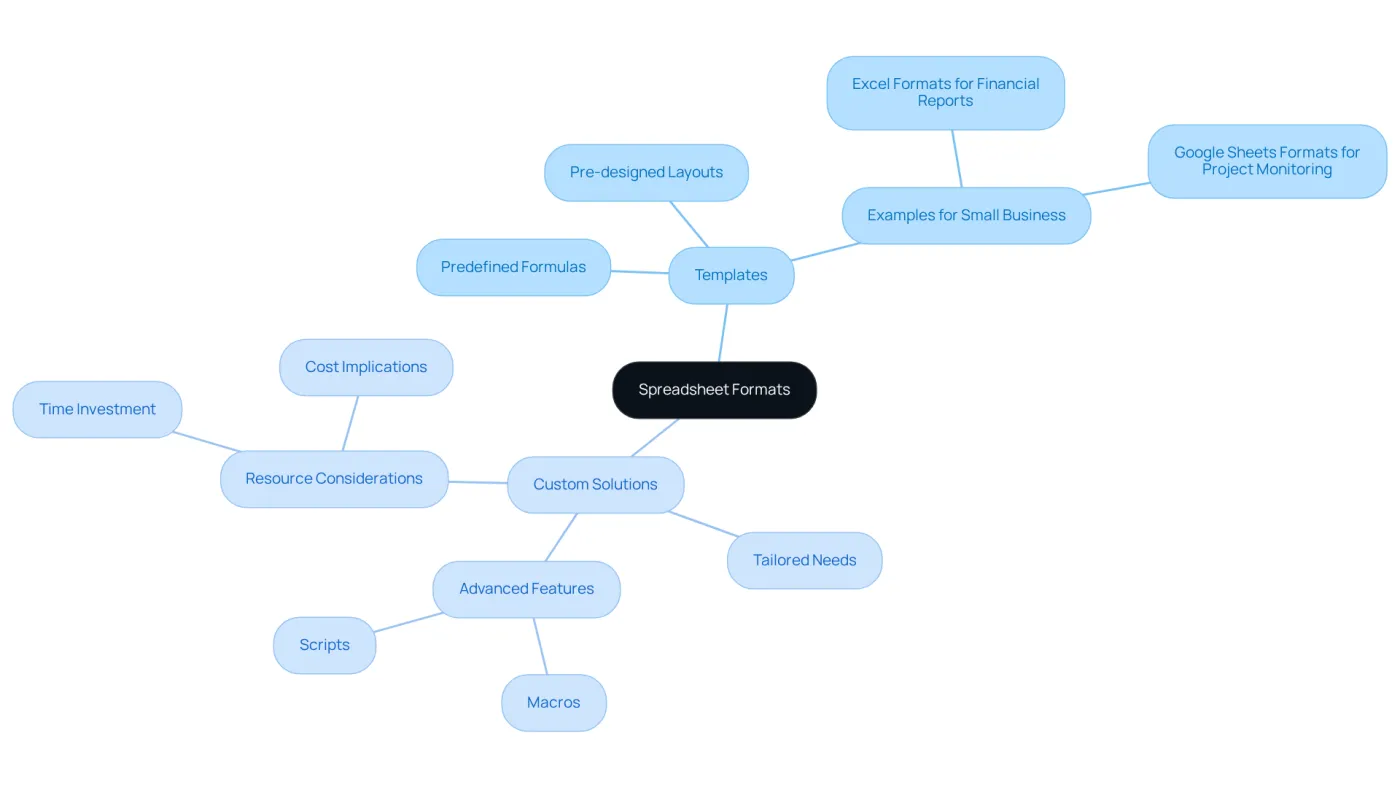
Spreadsheet formats serve as pre-designed files that offer a structured layout for a variety of tasks, such as budgeting, project management, and inventory tracking. These formats come equipped with predefined formulas and formatting, allowing users to input their data without starting from scratch. For instance, spreadsheet examples for small business, including Excel formats for financial reports and Google Sheets formats for project monitoring, are widely utilized, streamlining processes. Research indicates that a significant number of small businesses are utilizing spreadsheet examples for small business budgeting and project oversight, recognizing their effectiveness and simplicity. Companies that adopt these frameworks often report fewer mistakes and time savings, making them a practical choice compared to custom solutions.
On the other hand, customized spreadsheets are tailored to meet the specific needs of an organization or individual. These bespoke approaches typically involve the creation of specialized formulas, layouts, and functionalities that standard templates lack. Advanced features in Excel or Google Sheets, such as macros or scripts, can be employed to automate tasks and enhance user experience, making them ideal for organizations seeking a more personalized approach to their spreadsheet requirements. However, developing custom solutions can demand more resources and time, which may not be feasible for all small businesses.
It is crucial to thoroughly review the structure and key components of the selected layout before use to ensure accuracy and effectiveness. As highlighted, frameworks provide a structured format with essential components, significantly boosting productivity when utilized correctly.
Explore Benefits of Spreadsheet Templates for Small Businesses
Unlocking Efficiency: The Power of Spreadsheet Templates for Small Businesses
Spreadsheet templates offer a wealth of advantages for small businesses, particularly when it comes to enhancing operational efficiency and cutting costs. Here’s how they can transform your business:
-
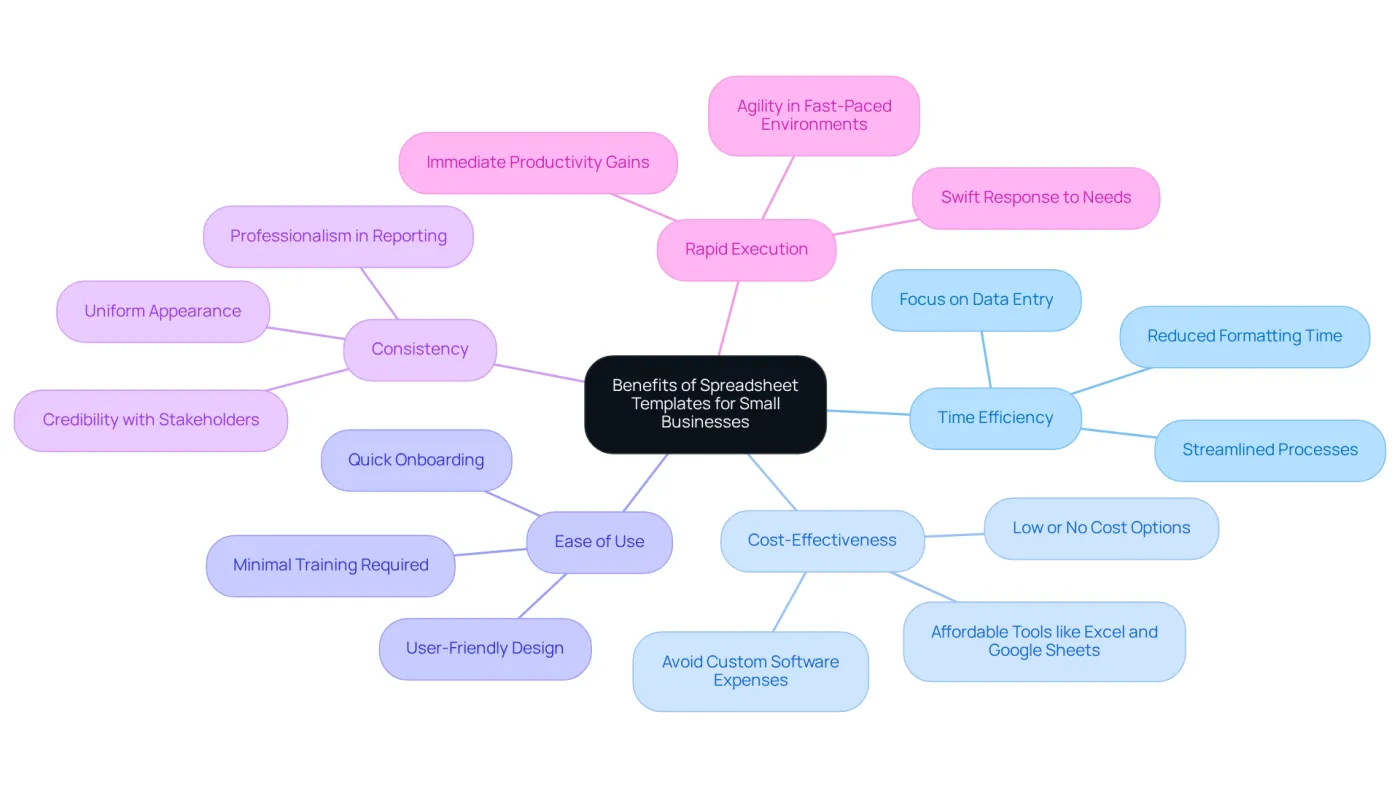
Time Efficiency: Templates streamline processes by providing a pre-structured format. This allows users to focus on data entry instead of spending hours on formatting. In a world where multitasking is essential, this efficiency is crucial.
-
Cost-Effectiveness: Many designs are available at little to no cost, making them an attractive option for small enterprises with tight budgets. By leveraging spreadsheet examples for small business, companies can sidestep the hefty expenses tied to custom software development. Spreadsheets like Microsoft Excel and Google Sheets are either free or available at a fraction of the cost of expensive accounting software.
-
Ease of Use: Designed with user-friendliness in mind, these formats often require minimal training. This makes them perfect for small teams or individuals who may not have extensive spreadsheet expertise. The result? Quicker onboarding and immediate productivity.
-
Consistency: Using standardized formats ensures that all documents maintain a uniform appearance and structure. This consistency is vital for upholding branding and professionalism. Moreover, it enhances credibility with stakeholders and investors through reliable financial reporting.
-
Rapid Execution: Templates empower companies to swiftly address urgent needs, such as expense tracking or project management, without the lengthy development timelines associated with custom solutions. This agility is particularly advantageous in fast-paced environments where timely decision-making is critical.
As we look ahead to 2026, small enterprises will continue to face financial challenges-82% of which struggle with cash flow. Utilizing spreadsheet examples for small business can lead to significant time savings and improved operational efficiency, ultimately fostering sustainable growth. Essential spreadsheets like the Income and Expense Tracker, Cash Flow Projection, Balance Sheet, Profit & Loss Statement, and Annual Budget are indispensable for mastering financial management.
Examine Advantages of Custom Spreadsheet Solutions
Custom spreadsheet solutions present a wealth of advantages that can significantly enhance business operations:
-
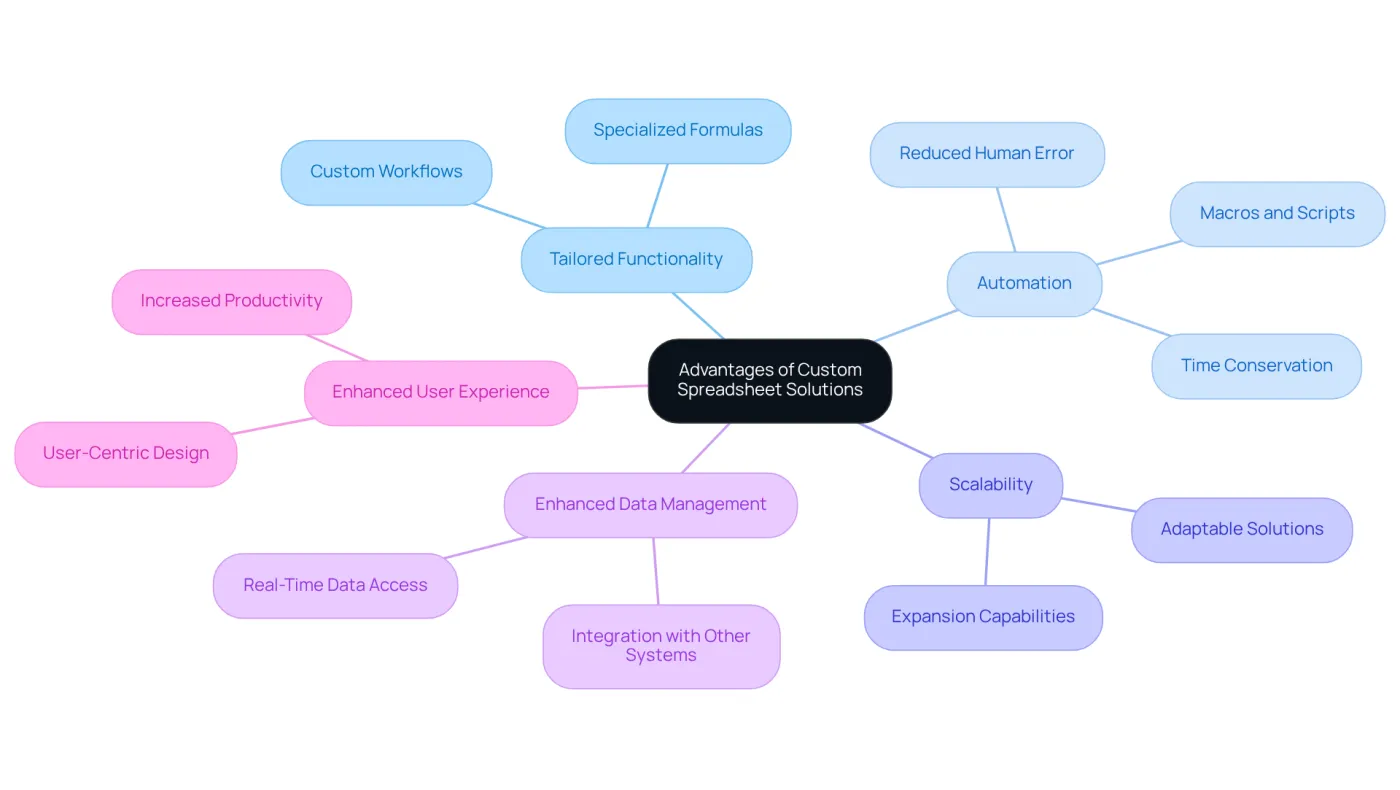
Tailored Functionality: These solutions are meticulously crafted to meet unique organizational needs, incorporating specialized formulas and workflows that standard templates often overlook. This level of customization ensures that the tools align seamlessly with operational requirements.
-
Automation: Leveraging advanced features like macros and scripts, custom spreadsheets can automate repetitive tasks. This not only reduces the risk of human error but also conserves valuable time, enabling employees to concentrate on more strategic initiatives.
-
Scalability: As businesses grow, their needs evolve. Tailored solutions can be easily adjusted and expanded to meet new demands, ensuring they remain effective and relevant over time.
-
Enhanced Data Management: Custom spreadsheets can integrate smoothly with other software systems, facilitating improved data management and analysis. This integration allows for real-time data access, enhancing decision-making capabilities.
-
Enhanced User Experience: By aligning spreadsheet designs with user workflows, tailored solutions boost usability and efficiency. This leads to increased productivity, as employees can navigate and utilize the tools more effectively.
The trend towards automation in personalized spreadsheet tools is unmistakable, with organizations increasingly recognizing the benefits of tailored features. By 2026, the emphasis on automation is expected to grow, as companies strive to streamline operations and enhance data management capabilities. Statistics indicate that automation can significantly reduce processing errors and improve overall efficiency, making spreadsheet examples for small business an essential resource for small enterprises aiming to thrive in a competitive landscape.
Compare Templates and Custom Solutions: Pros and Cons
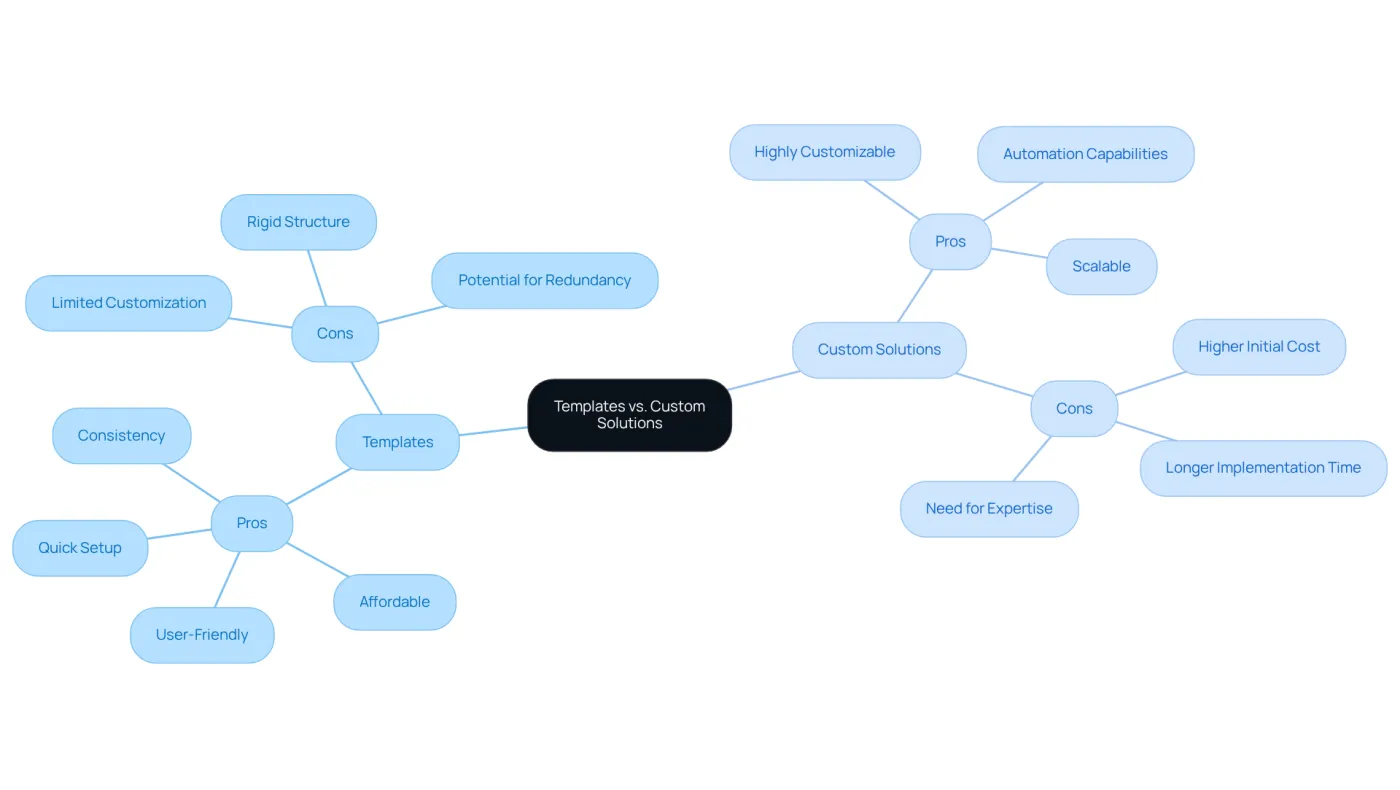
When evaluating spreadsheet templates versus custom solutions, several advantages and disadvantages come to light:
Templates
Pros:
- Quick Setup: Templates are ready-to-use, allowing for immediate implementation without extensive setup time.
- Affordable: Numerous designs can be obtained at no charge or for a minimal fee, ensuring they are reachable for small enterprises.
- User-Friendly: They typically require minimal training, enabling users to get started quickly.
- Consistency: Templates ensure a uniform appearance across documents, which can enhance professionalism.
Cons:
- Limited Customization: Templates may not fully address specific business needs, leading to potential gaps in functionality.
- Rigid Structure: Their fixed formats can make it challenging to adapt to unique workflows or processes.
- Potential for Redundancy: Some templates may include unnecessary features, complicating usage and detracting from efficiency.
Custom Solutions
Pros:
- Highly Customizable: Custom solutions can be tailored precisely to meet specific business requirements, ensuring all needs are addressed.
- Automation Capabilities: They can incorporate automation features that streamline processes, reducing the likelihood of errors.
- Scalable: Tailored approaches can develop in tandem with the company, adapting to expansion and shifting requirements.
Cons:
- Higher Initial Cost: Developing a custom solution can be significantly more expensive than using templates, which may be a barrier for small businesses.
- Longer Implementation Time: The process of developing and testing a tailored approach typically requires more time, delaying deployment.
- Need for Expertise: Creating and sustaining tailored approaches often requires specialized knowledge, which may not be readily accessible within the organization.
In 2026, the average expenses related to creating tailored spreadsheet applications vary greatly, often lying between $100 and $200 for basic features, while more intricate applications can soar into the thousands. This investment must be weighed against the potential for increased efficiency and reduced errors that a tailored approach can provide. Ultimately, the choice between templates and custom solutions will depend on the specific needs and resources of the business, including the use of spreadsheet examples for small business.
Conclusion
Choosing between spreadsheet templates and custom solutions is a crucial decision for small businesses looking to optimize their operations. Templates provide a cost-effective and user-friendly method for managing tasks efficiently. In contrast, custom solutions offer tailored functionality that can significantly enhance data management and operational workflows. Understanding the nuances of each option is essential for businesses to make informed decisions that align with their specific needs.
The benefits of spreadsheet templates are clear:
- They save time
- They are cost-effective
- They are easy to use
This makes them an attractive choice for many small enterprises. However, custom solutions bring advanced capabilities to the table, including automation and scalability, which can cater to unique business requirements. The pros and cons of each approach were explored, highlighting that the right choice ultimately depends on the individual circumstances of the business, such as budget constraints and operational demands.
In conclusion, small businesses must carefully evaluate their specific needs and resources when deciding between spreadsheet templates and custom solutions. Embracing the right spreadsheet strategy can lead to improved efficiency, reduced errors, and enhanced decision-making capabilities. By leveraging the strengths of either approach, businesses can position themselves for sustainable growth and success in an ever-evolving landscape.
Frequently Asked Questions
What are spreadsheet templates?
Spreadsheet templates are pre-designed files that offer a structured layout for various tasks, such as budgeting, project management, and inventory tracking. They come with predefined formulas and formatting, allowing users to input their data without starting from scratch.
How are spreadsheet templates beneficial for small businesses?
Spreadsheet templates streamline processes, reduce mistakes, and save time. Many small businesses utilize these templates for budgeting and project oversight, recognizing their effectiveness and simplicity.
What is the difference between spreadsheet templates and custom solutions?
Spreadsheet templates are standardized formats that provide a general structure, while custom solutions are tailored to meet the specific needs of an organization or individual, featuring specialized formulas and layouts.
What advanced features can be included in custom spreadsheets?
Custom spreadsheets can include advanced features such as macros or scripts in Excel or Google Sheets, which help automate tasks and enhance the user experience.
Are custom spreadsheet solutions always feasible for small businesses?
No, developing custom solutions can require more resources and time, which may not be feasible for all small businesses.
Why is it important to review the structure of a spreadsheet layout before use?
Thoroughly reviewing the structure and key components of the selected layout is crucial to ensure accuracy and effectiveness, thereby boosting productivity when utilized correctly.