
What is Format Stok Barang? Key Insights for Finance Professionals
Discover the essential components and significance of format stok barang for finance professionals.

Introduction
Understanding the complexities of stock management is crucial for finance professionals navigating today’s intricate business landscape. The stock format, or stok barang, stands out as a vital tool that not only streamlines inventory tracking but also enhances decision-making capabilities across various sectors. Many organizations grapple with maintaining accurate stock levels, which raises an important question: how can finance professionals utilize this structured approach to optimize inventory while driving profitability and sustainability in their operations?
Define Format Stok Barang: Key Elements and Structure
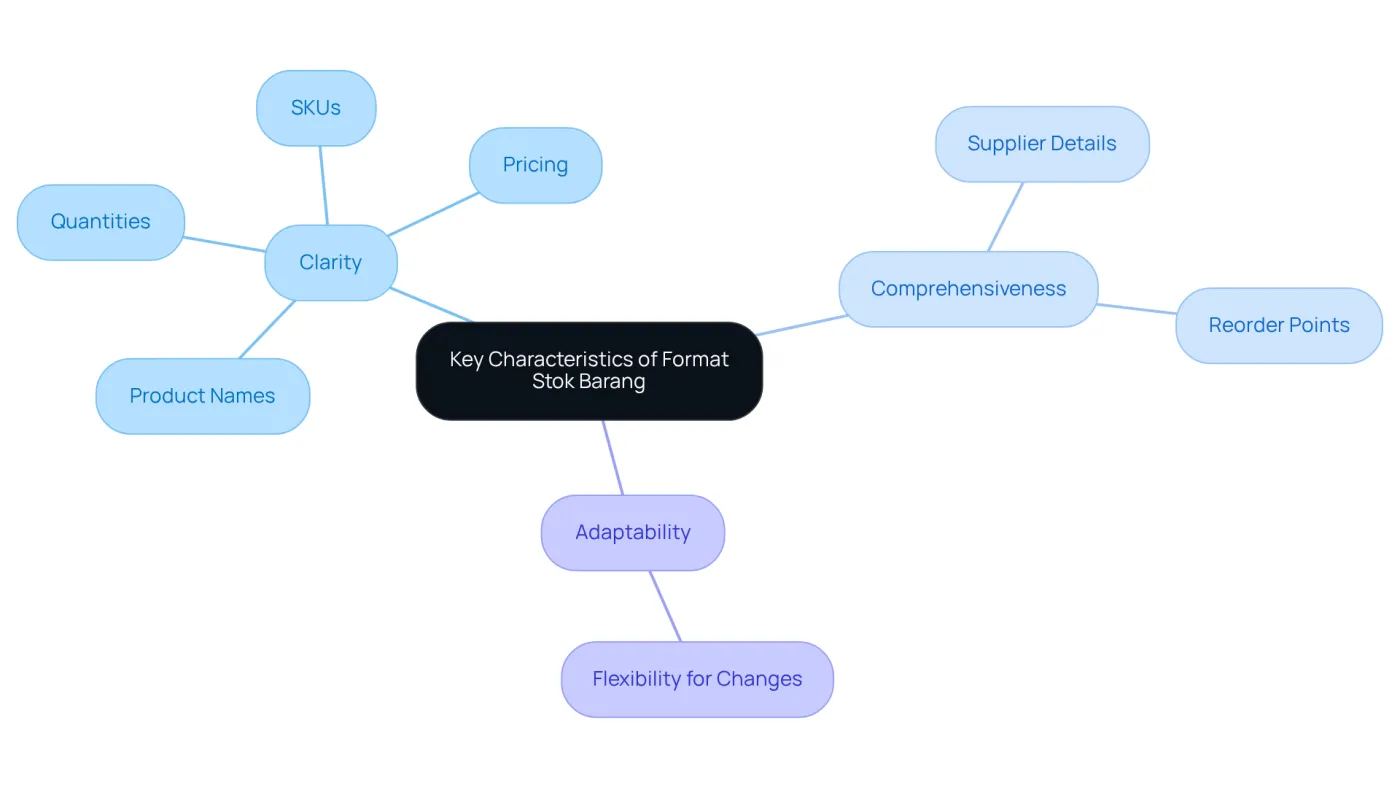
The format stok barang, also known as Stock Format, serves as a vital template for tracking stock levels, movements, and details of goods within an enterprise. This structured approach typically encompasses essential components such as product names, codes, quantities, purchase prices, and the format stok barang for managing stock locations. By facilitating straightforward data input and extraction, it empowers companies to maintain precise records of their stock in the format stok barang. For example, the format stok barang may include a well-organized layout featuring columns for item descriptions, SKU numbers, current stock levels, and reorder points. This enables finance professionals to monitor stock efficiently and make informed purchasing decisions.
The importance of format stok barang is underscored by the fact that 58% of retail brands and D2C manufacturers struggle to maintain over 80% accuracy in their stock levels. This statistic highlights the challenges businesses face in keeping accurate records. Moreover, with the average stock turnover rate across sectors projected to be 8.5 in 2024, as noted by Oliver Munro, having a reliable format stok barang becomes crucial for optimizing stock levels and minimizing costs. Additionally, 72% of retailers are expected to modify their supply chain operations, indicating a trend toward improving stock control practices. Efficient stock control not only supports financial decision-making but also enhances a company's ability to meet customer demands swiftly, thereby fostering customer satisfaction and loyalty.
Contextualize Importance: Role of Format Stok Barang in Restaurant Management
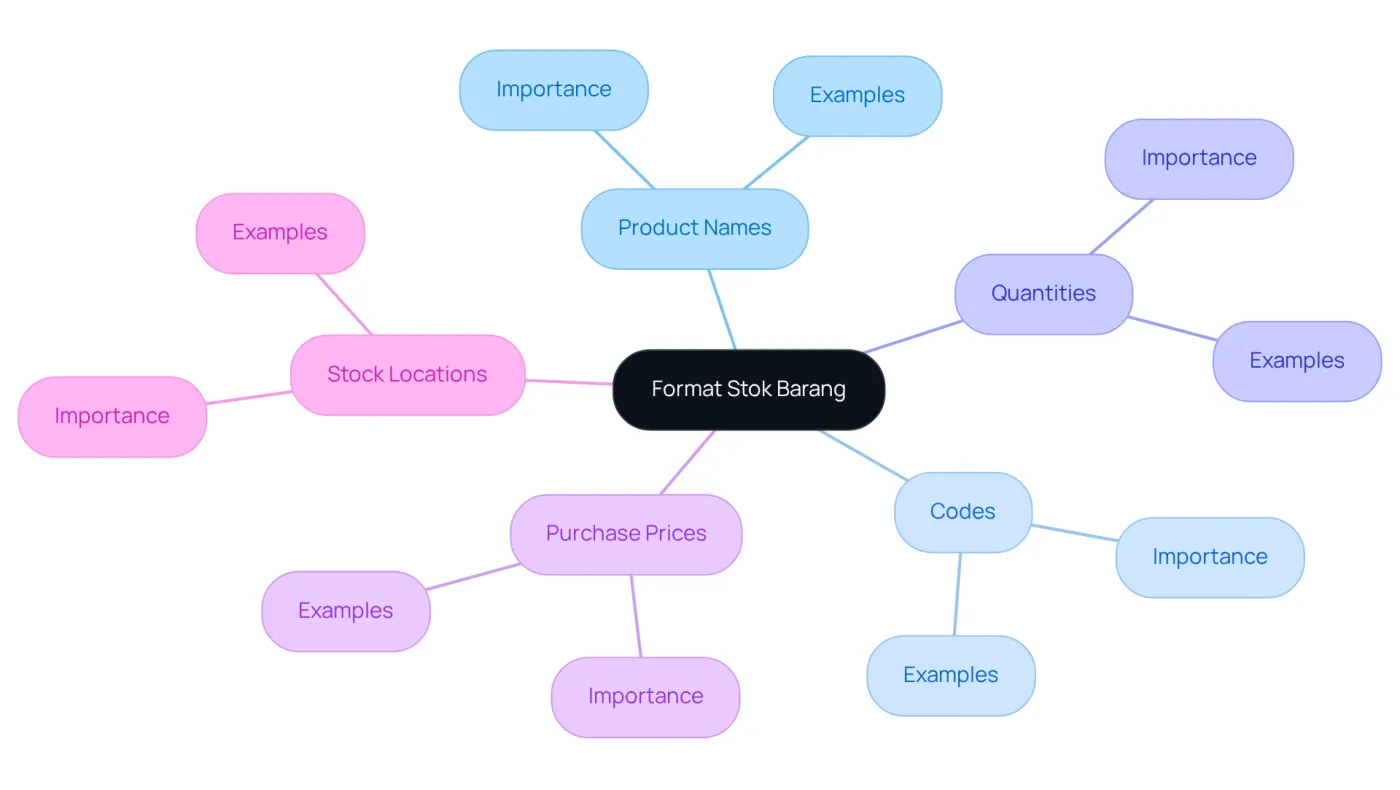
In restaurant management, effective stock management is crucial for maintaining optimal inventory levels, minimizing waste, and ensuring that all necessary ingredients are readily available for menu items. By implementing a format stok barang, restaurant managers can track supply levels in real-time, recognize usage patterns, and make informed purchasing and menu planning decisions.
Consider this: a restaurant that effectively utilizes the format stok barang can significantly reduce food spoilage. By accurately forecasting demand and adjusting orders accordingly, they not only enhance profitability - precise stock management can increase restaurant profits by 24% each year - but also elevate customer satisfaction by ensuring that popular menu items are consistently available.
Moreover, with a staggering one-third of all food worldwide wasted, amounting to over $1 trillion annually, adopting efficient stock control practices is essential. This proactive approach not only decreases waste but also promotes sustainability in the restaurant sector.
In summary, mastering stock management is not just about keeping shelves stocked; it’s about driving profitability and sustainability in a competitive industry.
Explore Origins: Historical Development of Format Stok Barang
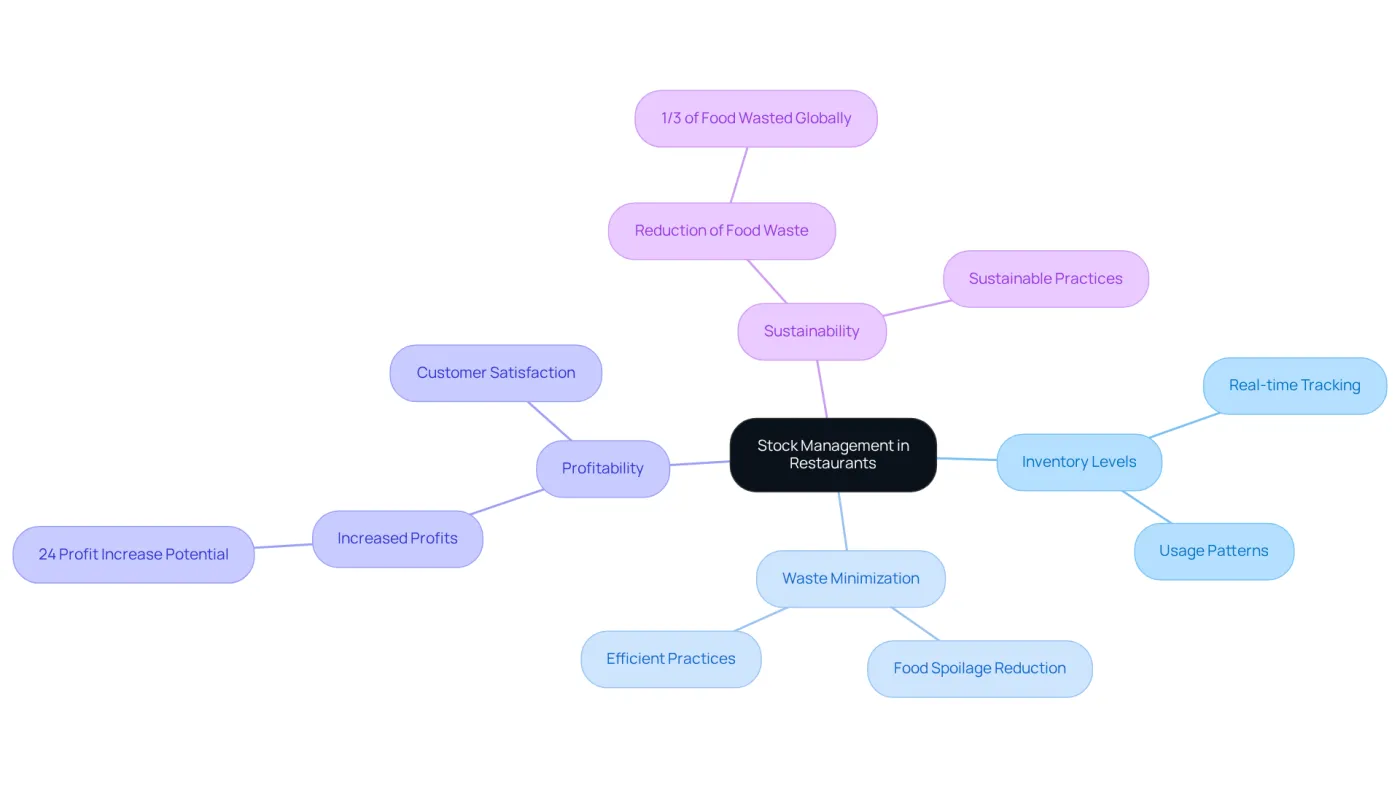
The evolution of format stok barang showcases remarkable advancements in stock management practices over the years. Traditionally, businesses relied on manual record-keeping, often leading to inaccuracies and inefficiencies. However, the late 20th century marked a pivotal shift as organizations began adopting computerized stock management systems, significantly enhancing tracking and reporting capabilities. This transition was accelerated by the introduction of standardized formats, such as spreadsheets and specialized software, which simplified stock handling processes. Notably, as of 2024, approximately 67.4% of stock managers still utilize Microsoft Excel for stock management, underscoring its enduring relevance despite the availability of more advanced tools.
Today, the format stok barang is indispensable across various sectors, including retail, manufacturing, and hospitality. The integration of technology has not only improved accuracy but also boosted efficiency, enabling businesses to leverage real-time data for optimal stock levels. Case studies reveal that organizations transitioning from manual to computerized systems have experienced significant improvements in stock accuracy, with some reporting accuracy rates as high as 97% when employing RFID technology. This development highlights the crucial role of technology in modern stock oversight, empowering finance professionals to maintain precise records and respond swiftly to market demands.
Furthermore, ShortieCuts currently operates on Google Chrome and plans to expand to Safari soon, ensuring that finance professionals can manage their stock data securely and efficiently while benefiting from local data privacy. The global stock management software market is projected to reach an estimated value of $4.8 billion by 2029, reflecting the growing importance of these technologies in enhancing stock management practices.
Identify Key Characteristics: Components of Format Stok Barang
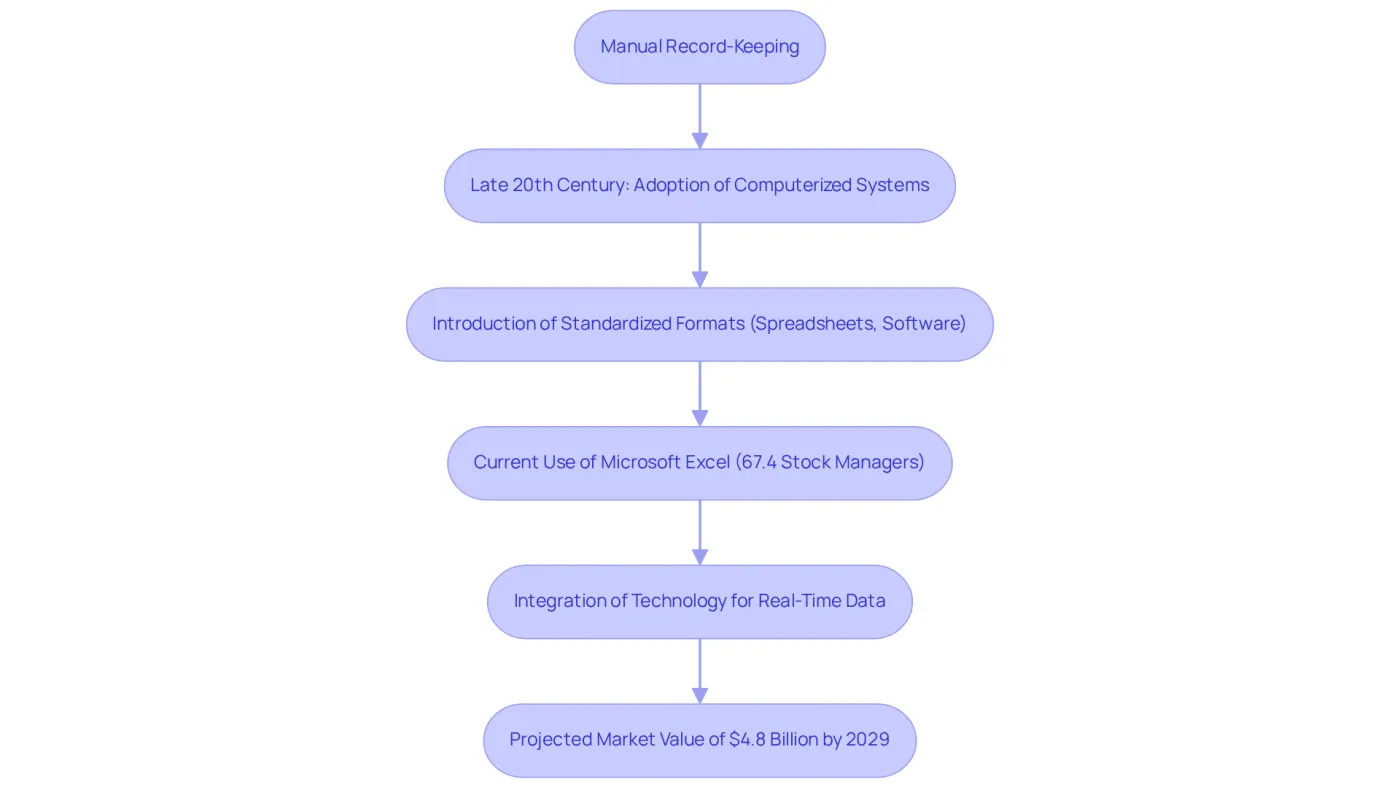
Key characteristics of format stok barang include clarity, comprehensiveness, and adaptability, which are essential elements for effective inventory management. A well-organized stock layout must clearly delineate critical components such as product names, SKUs, quantities, and pricing. This clarity in the format stok barang facilitates seamless data entry and retrieval, ensuring that finance professionals can access the information they need without any hassle.
Transparency in stock structures is crucial. Data indicates that 62% of company finances are impacted by issues in stock monitoring, underscoring the necessity for accurate documentation. A thorough structure should capture all pertinent information, including supplier details and reorder points. This comprehensive approach allows finance professionals to maintain a holistic perspective of their stock, which is vital for informed decision-making.
As of 2024, only 9% of organizations have achieved full supply chain visibility. This statistic highlights the challenges finance professionals face and the importance of having a complete view of stock. Adaptability is equally vital; the format stok barang must be flexible enough to accommodate changes in product lines or stock practices. This flexibility enables businesses to scale operations efficiently, responding to market demands swiftly.
By integrating these characteristics, organizations can significantly enhance their inventory management processes. Improved operational efficiency and reduced costs are direct benefits, as minimizing stockouts and overstocks can lower overall inventory costs by up to 12%. Embracing these principles not only addresses current challenges but also positions organizations for future success.
Conclusion
The format stok barang is essential for managing inventory across various sectors, especially for finance professionals who need precise and organized data to make informed decisions. By adopting this structured approach, businesses can effectively monitor stock levels, movements, and vital details about their goods, leading to enhanced accuracy and efficiency in inventory management.
Key insights throughout the article underscore the importance of format stok barang in financial reporting and decision-making. From its historical evolution to the critical components that define its structure, the discussion highlights the necessity for clarity, comprehensiveness, and adaptability in stock management. Statistics reveal the challenges many organizations face in maintaining accurate stock levels, emphasizing the pivotal role that a well-designed format stok barang plays in optimizing operations and minimizing costs.
Moreover, effective stock management practices not only boost profitability but also support sustainability efforts in industries like hospitality. As businesses aim to reduce waste and meet customer demands, the implementation of format stok barang becomes increasingly crucial. Embracing these principles empowers finance professionals to navigate the complexities of inventory management, ensuring their organizations remain competitive and responsive to market dynamics.
Frequently Asked Questions
What is the format stok barang?
The format stok barang, also known as Stock Format, is a template used for tracking stock levels, movements, and details of goods within an enterprise.
What key components are included in the format stok barang?
Key components typically include product names, codes, quantities, purchase prices, and stock location management.
How does the format stok barang benefit companies?
It facilitates straightforward data input and extraction, enabling companies to maintain precise records of their stock.
What kind of layout does the format stok barang have?
The layout often features organized columns for item descriptions, SKU numbers, current stock levels, and reorder points.
Why is maintaining accurate stock levels important for businesses?
Accurate stock levels are crucial because 58% of retail brands and D2C manufacturers struggle to maintain over 80% accuracy, which can impact financial decisions and customer satisfaction.
What is the projected average stock turnover rate across sectors for 2024?
The average stock turnover rate is projected to be 8.5 in 2024.
What trend is expected among retailers regarding supply chain operations?
It is expected that 72% of retailers will modify their supply chain operations to improve stock control practices.
How does efficient stock control impact customer satisfaction?
Efficient stock control enhances a company's ability to meet customer demands swiftly, fostering customer satisfaction and loyalty.