
How to Remove a Space Before Text in Excel: Step-by-Step Guide
Learn effective methods to remove leading spaces before text in Excel for cleaner data.

Overview
This article serves as a comprehensive guide for removing spaces before text in Excel, underscoring the critical importance of eliminating leading gaps to ensure data integrity and accuracy. It outlines several effective methods, including:
- The TRIM function
- Find and Replace
- Text to Columns
Real-world examples are provided to illustrate how these techniques significantly enhance data processing efficiency and mitigate errors in analysis.
Introduction
In the realm of data management, even the smallest details can have significant repercussions, and leading spaces in Excel are no exception. These hidden gaps can disrupt sorting, filtering, and calculations, leading to erroneous analyses and reports. Understanding how to remove a space before text in Excel not only enhances data integrity but also streamlines workflow efficiency.
What are the most effective methods to tackle these elusive spaces? How can users ensure their spreadsheets remain precise and reliable? Addressing these questions is crucial for maintaining accurate data management practices.
Understand Spaces in Excel
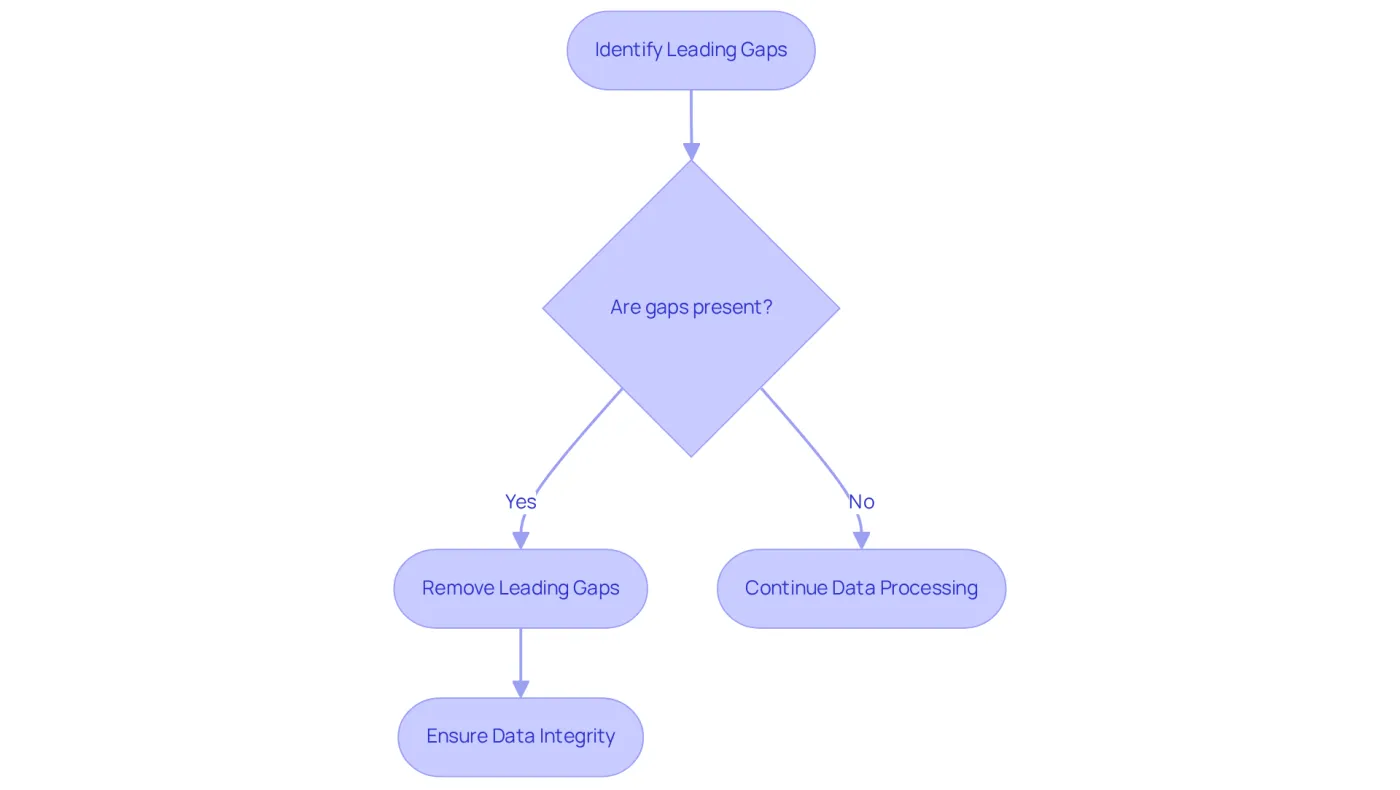
In Excel, initial gaps frequently serve as unseen offenders that undermine information integrity and formatting. These gaps, which appear before text in a cell, highlight the importance of knowing how to remove a space before text in Excel, as they can significantly disrupt sorting, filtering, and calculations. For instance, when importing information from external sources, leading gaps may not be readily apparent, resulting in incorrect outcomes during analysis. Analysts emphasize that maintaining clear information is crucial for accurate reporting and decision-making. As one specialist noted, 'Leading gaps can change the perceived arrangement of information,' underscoring their potential to mislead interpretations.
Real-world instances abound where organizations have encountered difficulties due to these overlooked areas, leading to inefficiencies and mistakes in information processing. Eliminating initial gaps enhances efficiency by ensuring information precision, which is crucial when learning how to remove a space before text in Excel, thereby facilitating sorting and filtering. Identifying and managing prominent gaps is essential for anyone seeking to understand how to remove a space before text in Excel to ensure their spreadsheets are both precise and effective.
Establishing validation criteria can also prevent the input of initial gaps, further improving information integrity.
Use the TRIM Function to Eliminate Leading Spaces
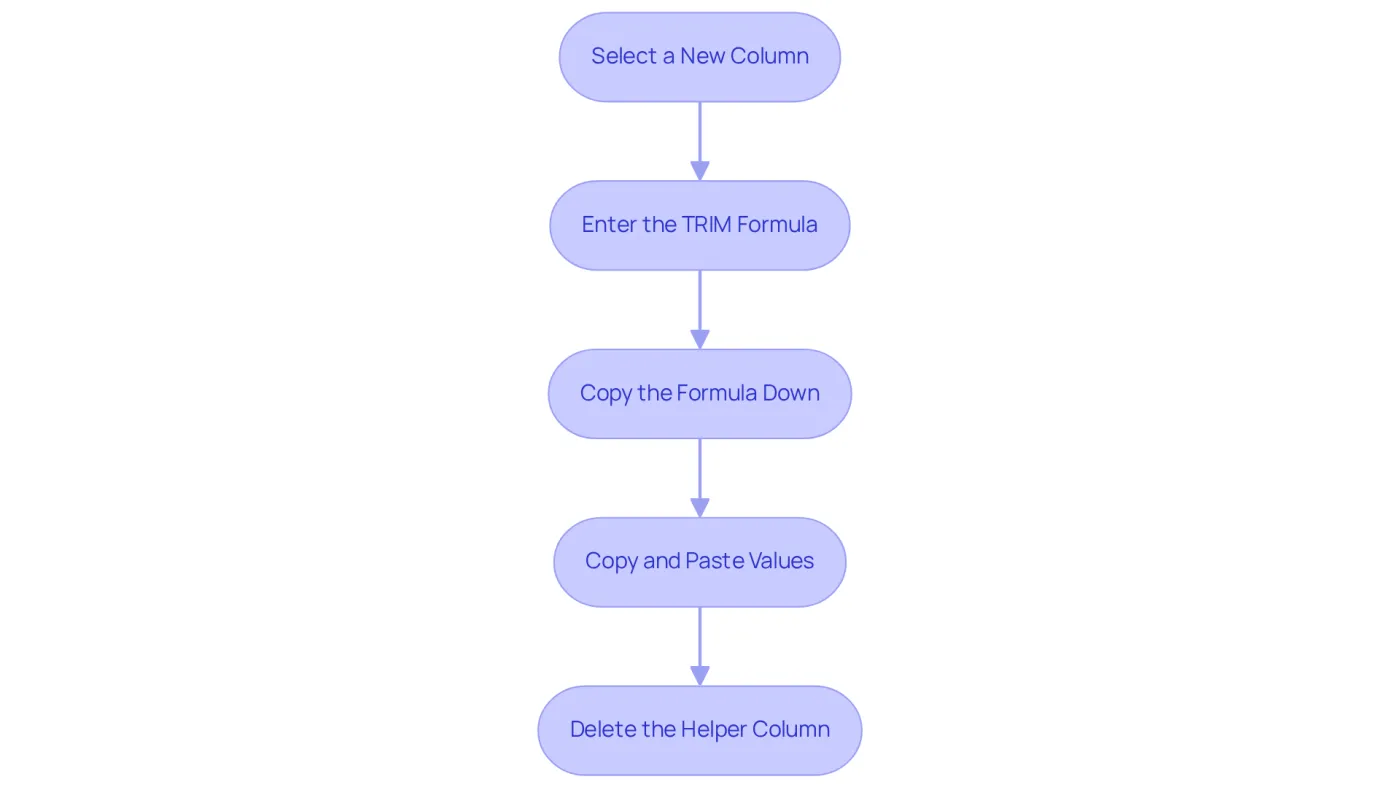
To effectively understand how to remove a space before text in Excel, the TRIM function is indispensable. Follow these steps to ensure your data remains clean and reliable:
- Select a New Column: Begin by choosing an empty column adjacent to the data you wish to clean.
- Enter the TRIM Formula: In the first cell of the new column, input
=TRIM(A1), replacingA1with the reference to the cell containing the text with leading gaps. - Copy the Formula Down: Click on the small square at the bottom-right corner of the cell with the TRIM formula and drag it down to apply the formula to the other cells in the column.
- Copy and Paste Values: Once the TRIM function has processed all relevant cells, copy the new column and paste it back into the original column as values (right-click > Paste Special > Values) to replace the initial information without spaces.
- Delete the Helper Column: Finally, remove the column where you applied the TRIM function, leaving you with clean information.
The TRIM function is crucial for upholding information integrity, particularly in financial spreadsheets where precision is paramount. For instance, when organizing data for pivot tables or reports, removing unnecessary gaps ensures that names and entries are handled uniformly. This practice avoids mistakes that could arise from inconsistencies in formatting. Neglecting the TRIM function can lead Excel to recognize entries as distinct, creating significant challenges in organizing information and generating reports. A case study on data preparation in Excel illustrates this issue, demonstrating how additional gaps in names can interfere with the creation of pivot tables. This emphasizes how to remove a space before text in Excel, which is crucial for achieving clean and dependable data.
Explore Additional Techniques for Removing Spaces
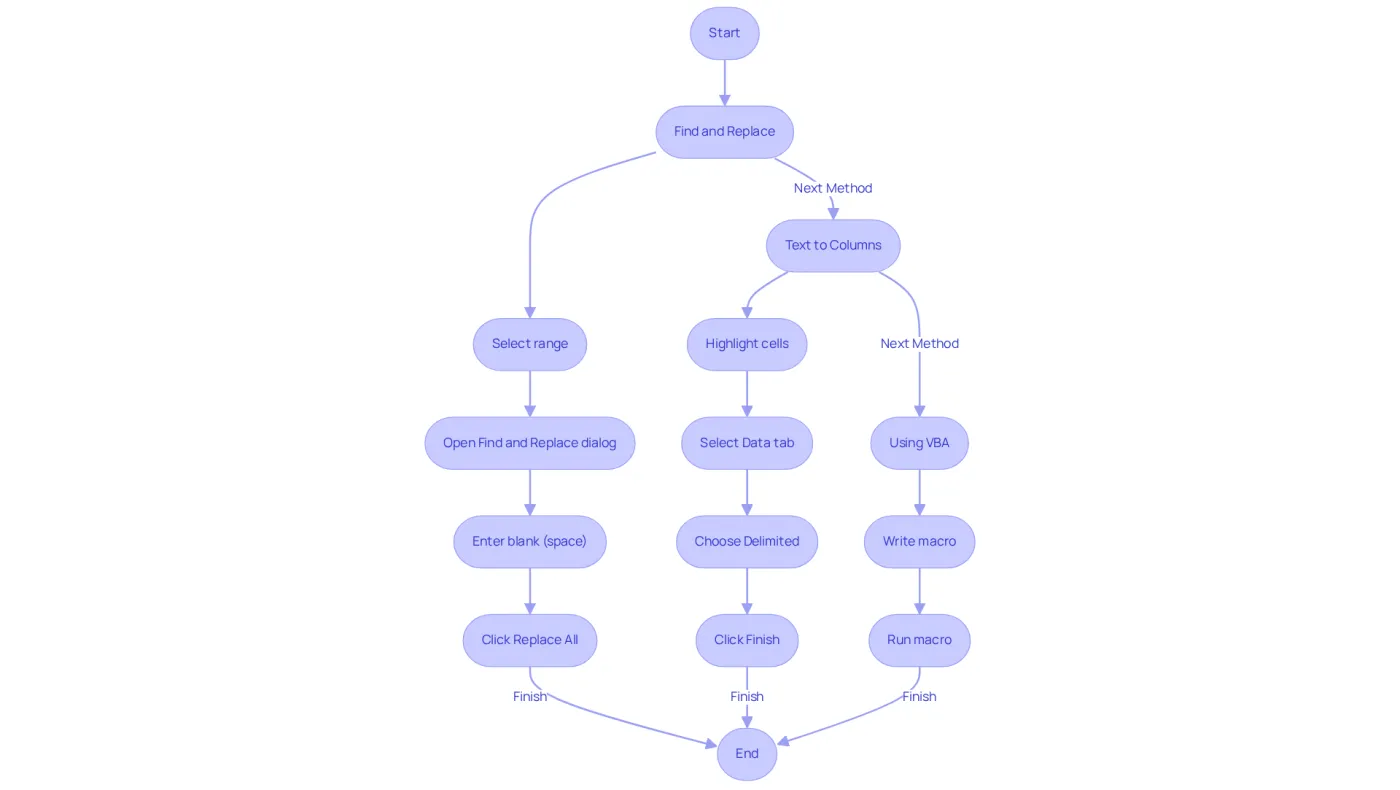
In addition to the TRIM function, several effective techniques can be employed to understand how to remove a space before text in Excel.
Find and Replace:
- Select the range of cells you wish to clean.
- Press
Ctrl + Hto open the Find and Replace dialog. - In the 'Find what' box, enter a single blank (hit the spacebar once).
- Leave the 'Replace with' box empty and click 'Replace All'. This action will demonstrate how to remove a space before text in Excel from the chosen units. However, it's important to note that while this method is effective, it does not allow for bulk replacement of multiple values, which can be a limitation in certain scenarios.
Using Text to Columns:
- Highlight the cells containing leading spaces.
- Navigate to the Data tab and select 'Text to Columns'.
- Choose 'Delimited' and click 'Next'. Uncheck all delimiters and click 'Finish'. This method can also effectively tidy up areas. Based on user experiences, this feature is often employed for cleaning tasks, making it a valuable tool in Excel.
Using VBA:
- For those comfortable with coding, a simple VBA macro can be created to remove leading spaces from a selected range. This method is particularly efficient for handling large datasets.
As emphasized by information specialists, cleansing information is frequently fraught with obstacles like formatting problems and absent values. By exploring these additional techniques, users can learn how to remove a space before text in Excel, ensuring their data remains clean and functional.
Conclusion
Understanding how to remove a space before text in Excel is essential for maintaining the integrity and accuracy of data. Leading spaces can lead to significant issues in sorting, filtering, and calculations, ultimately affecting decision-making processes. By mastering techniques such as the TRIM function, users can ensure their spreadsheets are precise and effective, promoting clearer data presentation and analysis.
Throughout this article, various methods for eliminating leading spaces have been discussed, including:
- The TRIM function
- Find and Replace
- Text to Columns
- VBA for more advanced users
Each technique offers unique advantages, whether it’s the simplicity of the TRIM function or the bulk capabilities of Find and Replace. Understanding when and how to apply these methods can greatly enhance data quality and reduce errors in reporting.
Ultimately, taking the time to remove leading spaces not only improves the functionality of Excel spreadsheets but also reinforces the importance of data cleanliness in any analytical context. Embracing these practices is crucial for anyone looking to enhance their data management skills, ensuring that every piece of information is accurate and reliable. Whether for personal projects or professional reporting, effective data cleaning techniques are invaluable tools for achieving clarity and precision in Excel.
Frequently Asked Questions
Why are initial gaps in Excel problematic?
Initial gaps in Excel can undermine data integrity and formatting, disrupt sorting, filtering, and calculations, and lead to incorrect outcomes during analysis.
How can leading gaps affect data analysis?
Leading gaps may not be readily apparent when importing data from external sources, resulting in misleading interpretations and potentially incorrect reporting and decision-making.
What is the importance of removing spaces before text in Excel?
Removing spaces before text enhances efficiency and ensures information precision, which is crucial for accurate sorting and filtering in spreadsheets.
How can organizations suffer from overlooked initial gaps?
Organizations may encounter difficulties and inefficiencies in information processing due to overlooked initial gaps, leading to mistakes and misinterpretations.
What can be done to prevent the input of initial gaps in Excel?
Establishing validation criteria can help prevent the input of initial gaps, thereby improving information integrity.