
What is an Inventory Spreadsheet Template and Why It Matters
Discover the significance of inventory spreadsheet templates for effective stock management.
Overview
An inventory spreadsheet template serves as a vital tool for businesses and individuals aiming to track and manage their inventory effectively. This structured resource includes essential components such as item names, quantities, and reorder levels.
Why is this important? These templates are crucial for optimizing operational efficiency. They help prevent stock shortages and enhance decision-making processes. Ultimately, implementing such a template can lead to improved cash flow and increased profitability for organizations.
Consider the benefits:
- With a well-organized inventory spreadsheet, businesses can streamline their operations.
- Reduce waste.
- Make informed purchasing decisions.
This not only saves time but also maximizes resources, allowing for better financial management.
In conclusion, adopting an inventory spreadsheet template is not just a good practice; it’s a strategic move that can significantly impact your bottom line. Are you ready to take control of your inventory management?
Introduction
An effective inventory management system stands as the backbone of successful businesses. Yet, many organizations grapple with maintaining optimal stock levels. Enter inventory spreadsheet templates—powerful tools that enable companies to track, analyze, and optimize their inventory effortlessly. But with a plethora of options available, what truly distinguishes an effective inventory spreadsheet template?
This article explores the essential features, variations, and benefits of these templates. By understanding their capabilities, businesses can transform their inventory management processes and drive success. Are you ready to elevate your inventory management strategy?
Define Inventory Spreadsheet Template
Mastering Inventory Management: The Essential Spreadsheet Model
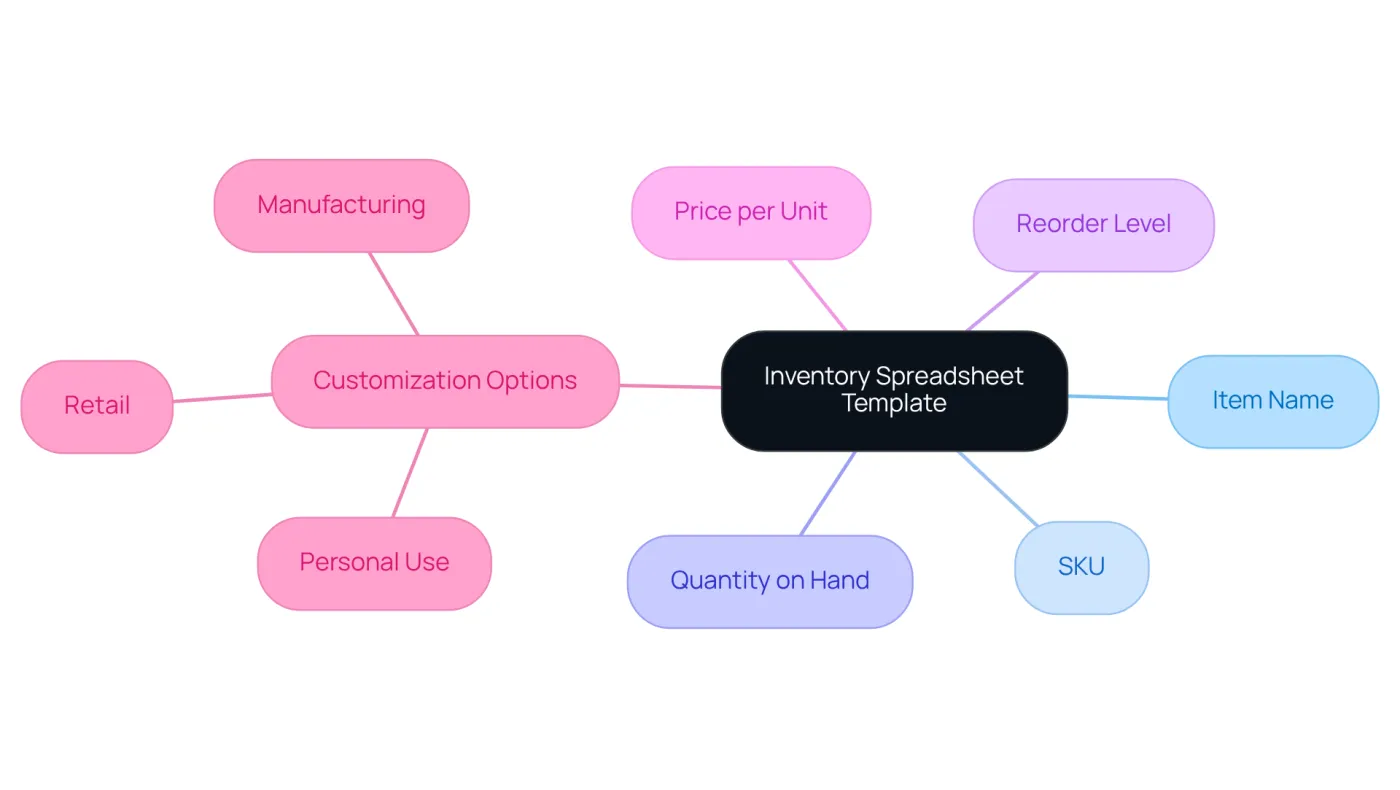
An inventory spreadsheet model is crucial for businesses and individuals looking to track and manage their inventory effectively. These models typically include vital columns such as:
- Item name
- SKU (Stock Keeping Unit)
- Quantity on hand
- Reorder level
- Price per unit
Customization options allow users to tailor the design to their specific needs, whether for retail, manufacturing, or personal use.
By systematically organizing stock information, these frameworks not only streamline operations but also enhance decision-making processes. Notably, 67.4% of stock controllers rely on Microsoft Excel for managing their resources, underscoring the widespread reliance on these tools. The importance of stock control frameworks cannot be overstated; they help businesses maintain accurate inventory levels, prevent shortages, and refine procurement strategies.
For instance, companies that implement effective stock management practices can significantly boost cash flow and profitability. In summary, an inventory spreadsheet template is indispensable for organizations striving to enhance their operational efficiency and responsiveness to market demands.
Explain the Importance of Inventory Spreadsheet Templates for Businesses
Optimize Your Inventory Management for Success
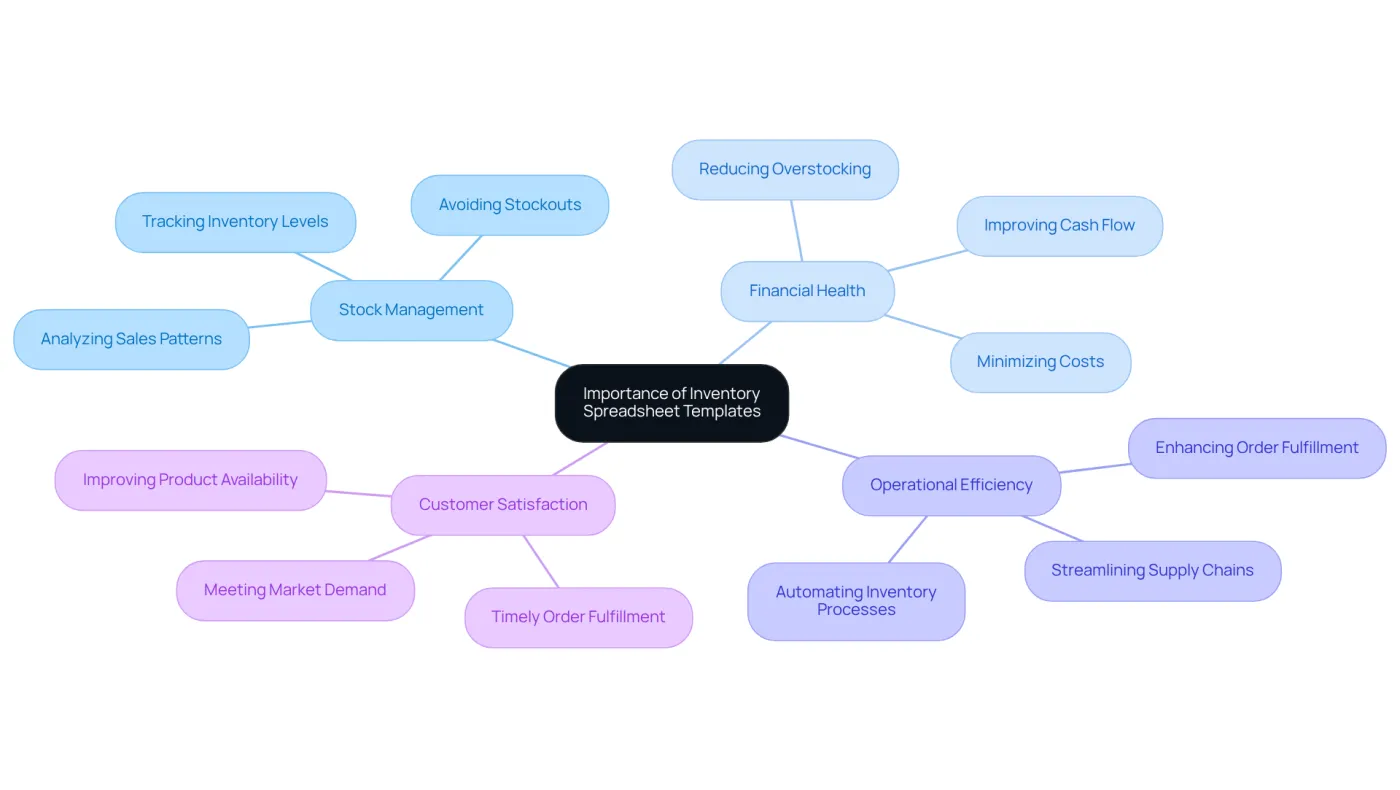
Inventory spreadsheet templates are vital for businesses, providing a clear view of stock levels that helps avoid stockouts and overstock situations. By keeping accurate stock records, companies can streamline their supply chains, significantly cut carrying costs, and improve cash flow. Poor inventory management can lock up cash in unsold stock, directly affecting a company's financial health.
The inventory spreadsheet template also facilitates the analysis of sales patterns and demand forecasting, enabling informed purchasing decisions that align with market needs. This proactive approach not only enhances operational efficiency but also boosts customer satisfaction, as businesses are better positioned to fulfill orders promptly and accurately.
Consider firms like Zalando, which demonstrate that strategic stock management can lead to consistent revenue growth. This underscores the importance of the inventory spreadsheet template in achieving business success. As Peter Drucker wisely noted, "Efficiency is doing things right; effectiveness is doing the right things," highlighting the critical role of organization in inventory control.
In today's eCommerce landscape, the challenges of predicting stockouts further emphasize the necessity of these models to navigate complexities and maintain operational efficiency. Don't let poor inventory management hold your business back—embrace these tools to enhance your financial health and operational success.
Identify Key Features of Effective Inventory Spreadsheet Templates
Optimize Your Inventory Management with Essential Spreadsheet Features
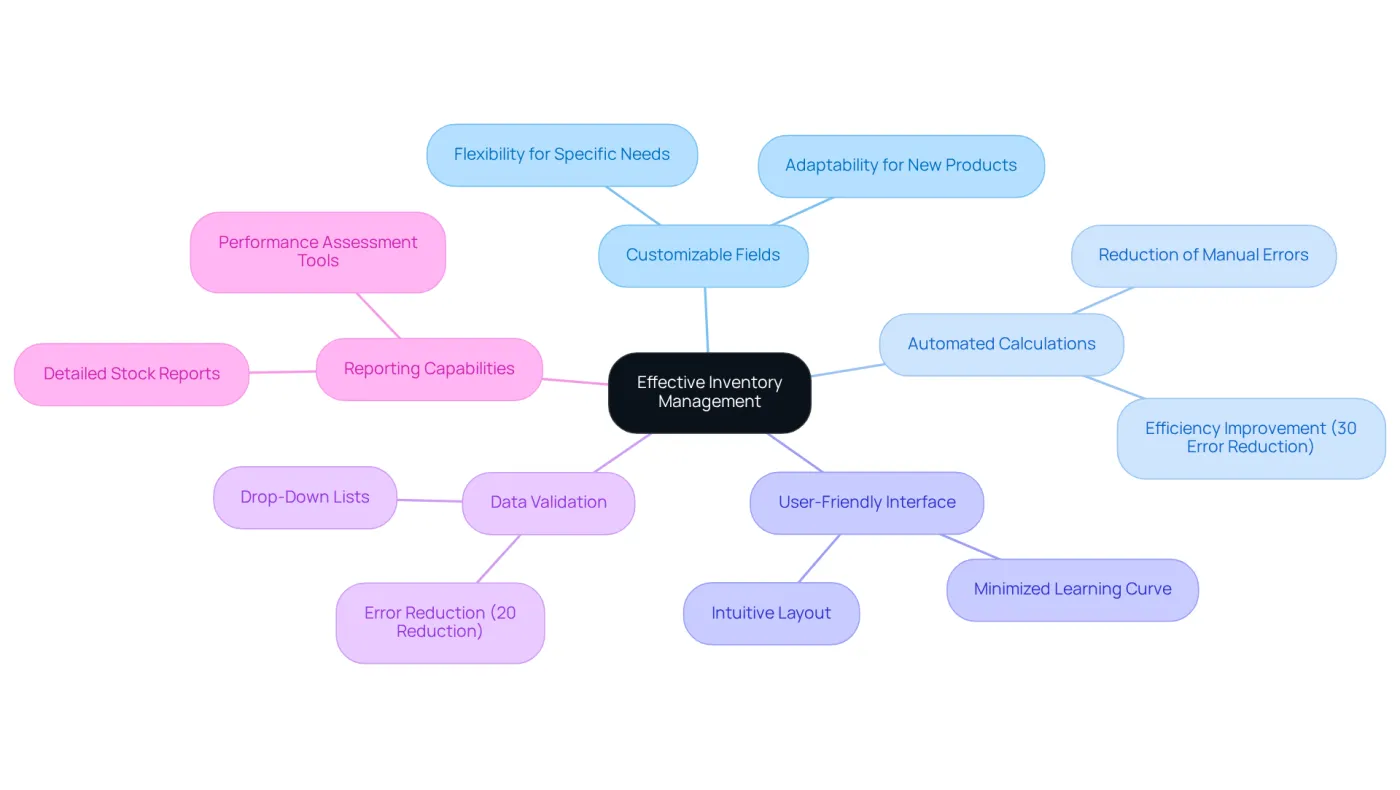
Effective inventory management is crucial for any business aiming to thrive in a competitive market. To achieve this, your inventory spreadsheet templates should incorporate several essential features:
- Customizable Fields: Flexibility is key. Users must be able to modify fields according to their specific inventory needs. This adaptability allows companies to tailor their templates to include new products, suppliers, and locations, ensuring the system evolves alongside their requirements.
- Automated Calculations: Say goodbye to manual errors. Implementing automated calculations for stock levels and reorder alerts significantly reduces mistakes and saves time. Statistics show that businesses using automated systems experience a notable decrease in stock discrepancies, enhancing overall efficiency. In fact, companies that streamline their stock processes can minimize errors by as much as 30%, leading to greater precision in stock management.
- User-Friendly Interface: Usability matters. A clear and intuitive layout is vital, especially for those transitioning from other software. A well-designed interface minimizes the learning curve and facilitates smoother operations.
- Data Validation: Maintain integrity. Incorporating drop-down lists and validation rules is crucial for preventing inconsistencies and errors during data entry. This practice can reduce data entry errors by 20%, ensuring that only valid entries are made.
- Reporting Capabilities: Informed decisions drive success. The ability to produce detailed reports on stock levels, sales trends, and turnover is essential. Efficient reporting tools enable managers to assess performance indicators, allowing proactive adjustments to stock strategies. As supply chain specialist Alberto Manassero states, "Effective stock oversight ensures your enterprise operates efficiently, reducing waste and enhancing profits."
Together, these features enhance the efficiency and effectiveness of inventory management processes by utilizing an inventory spreadsheet template, empowering companies to reduce waste and increase profits. Don't let outdated systems hold you back—implement these essential features today and watch your inventory management transform.
Explore Variations of Inventory Spreadsheet Templates
Understanding Inventory Spreadsheet Formats
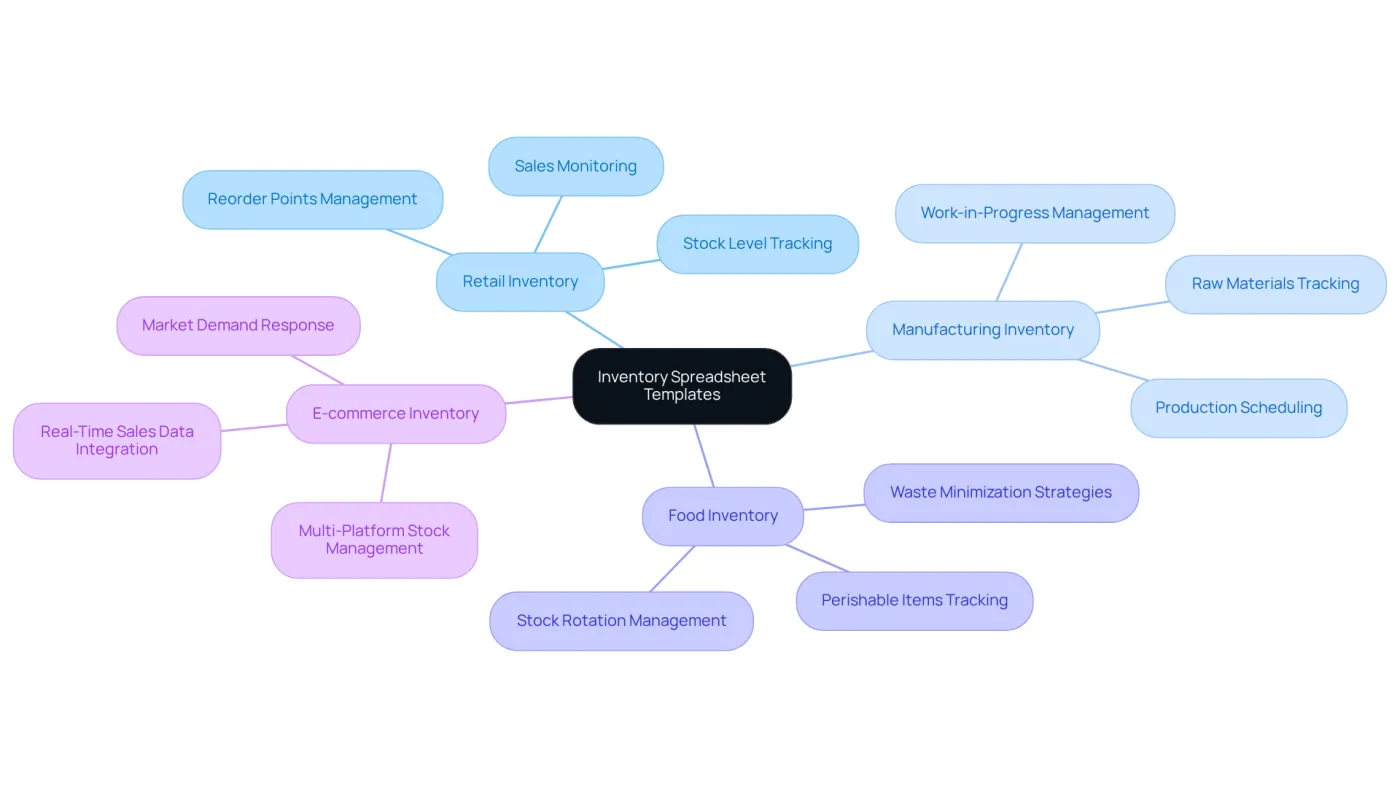
Inventory spreadsheet formats come in various types, each tailored to meet distinct organizational needs. Here’s a closer look at some of the most effective templates available:
-
Retail Inventory Templates: These are specifically designed for tracking stock levels, sales, and reorder points in retail environments. They help businesses maintain optimal inventory levels, ensuring that popular items are always in stock.
-
Manufacturing Inventory Templates: Focused on raw materials, work-in-progress, and finished goods, these templates often include production schedules. They streamline the manufacturing process, allowing for better planning and resource allocation.
-
Food Inventory Templates: Tailored for restaurants and food services, these templates track perishable items and manage stock rotation. This ensures freshness and minimizes waste, which is crucial in the food industry.
-
E-commerce Inventory Templates: These assist online businesses in managing stock across various platforms, incorporating sales data for real-time updates. They enable businesses to respond quickly to market demands, enhancing customer satisfaction.
Each variation is crafted to tackle the unique challenges faced by its respective industry. By utilizing these specialized templates, businesses can effectively manage their inventory, leading to improved operational efficiency and profitability.
Conclusion
An inventory spreadsheet template is an essential tool for effective inventory management, allowing businesses and individuals to systematically track and organize their stock. With a structured format that includes vital data points like item names, quantities, and reorder levels, these templates empower users to maintain accurate inventory records and make informed decisions.
The importance of inventory spreadsheet templates is evident in their ability to enhance operational efficiency and financial health. They help prevent stockouts and overstock situations, facilitate demand forecasting, and streamline supply chain processes. Essential features—such as customizable fields, automated calculations, and user-friendly interfaces—minimize errors and boost overall productivity.
Embracing inventory spreadsheet templates goes beyond mere convenience; it’s a strategic move that can significantly influence a business's success. By investing in effective inventory management practices, organizations can optimize operations, enhance customer satisfaction, and drive profitability. The message is clear: prioritize the implementation of these templates to unlock the full potential of inventory management and maintain a competitive edge in the market.
Frequently Asked Questions
What is an inventory spreadsheet template?
An inventory spreadsheet template is a tool used by businesses and individuals to track and manage their inventory effectively, typically including columns such as item name, SKU, quantity on hand, reorder level, and price per unit.
Why is an inventory spreadsheet important?
An inventory spreadsheet is important because it helps businesses maintain accurate inventory levels, prevent shortages, and refine procurement strategies, ultimately enhancing operational efficiency and decision-making processes.
How can users customize an inventory spreadsheet?
Users can customize an inventory spreadsheet to fit their specific needs, whether for retail, manufacturing, or personal use, by adjusting the design and the included columns.
What percentage of stock controllers use Microsoft Excel for inventory management?
Approximately 67.4% of stock controllers rely on Microsoft Excel for managing their resources.
What are the benefits of effective stock management practices?
Effective stock management practices can significantly boost cash flow and profitability for companies by ensuring they have the right inventory levels at the right time.